_画板-1-e1760947912226.png)
_画板-1-1-300x300.png)
Pimple Positivity Has Gone Pop: How Acne Patches Became the Celebrity Beauty Trend No One Is Hiding Anymore
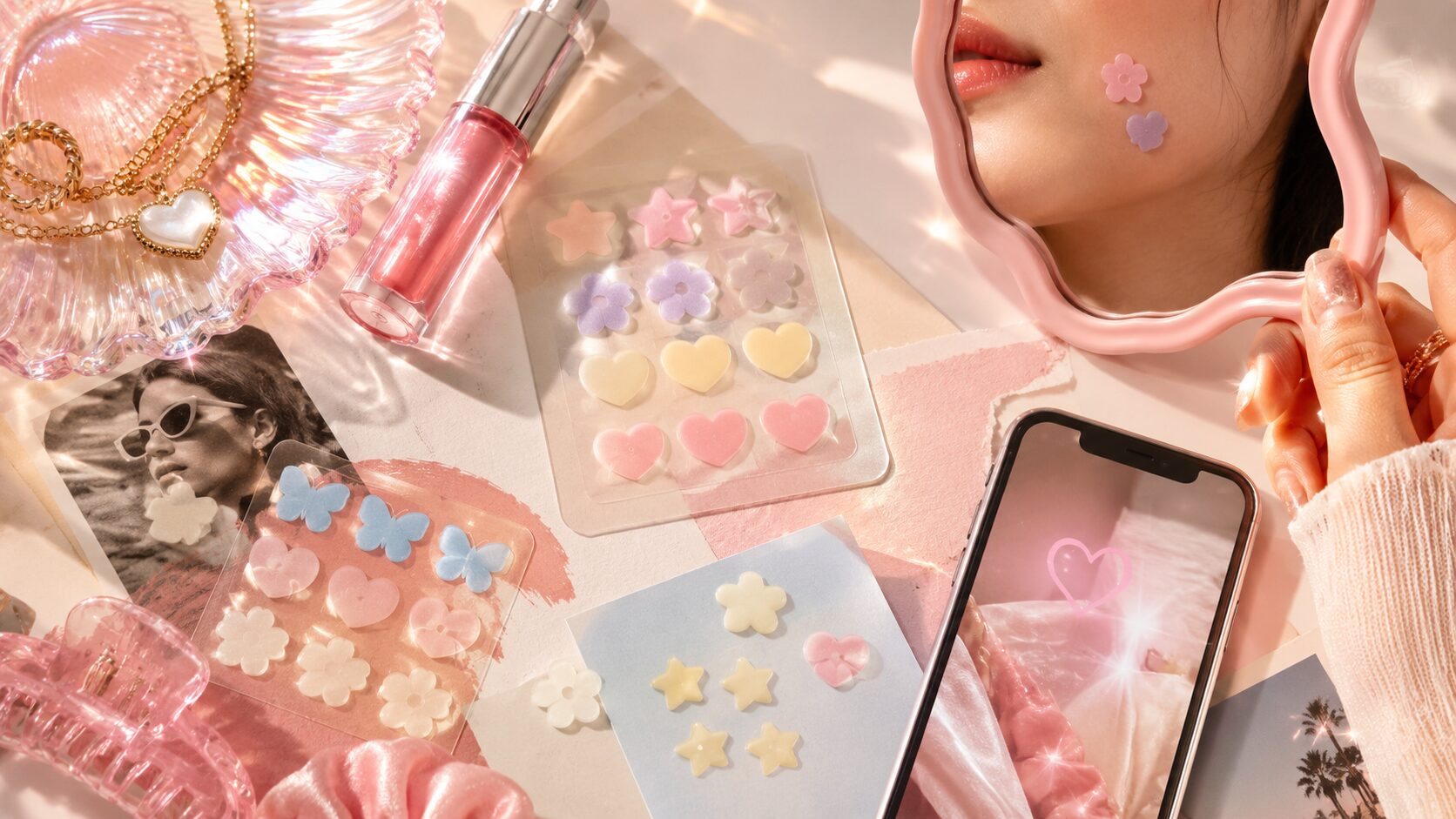
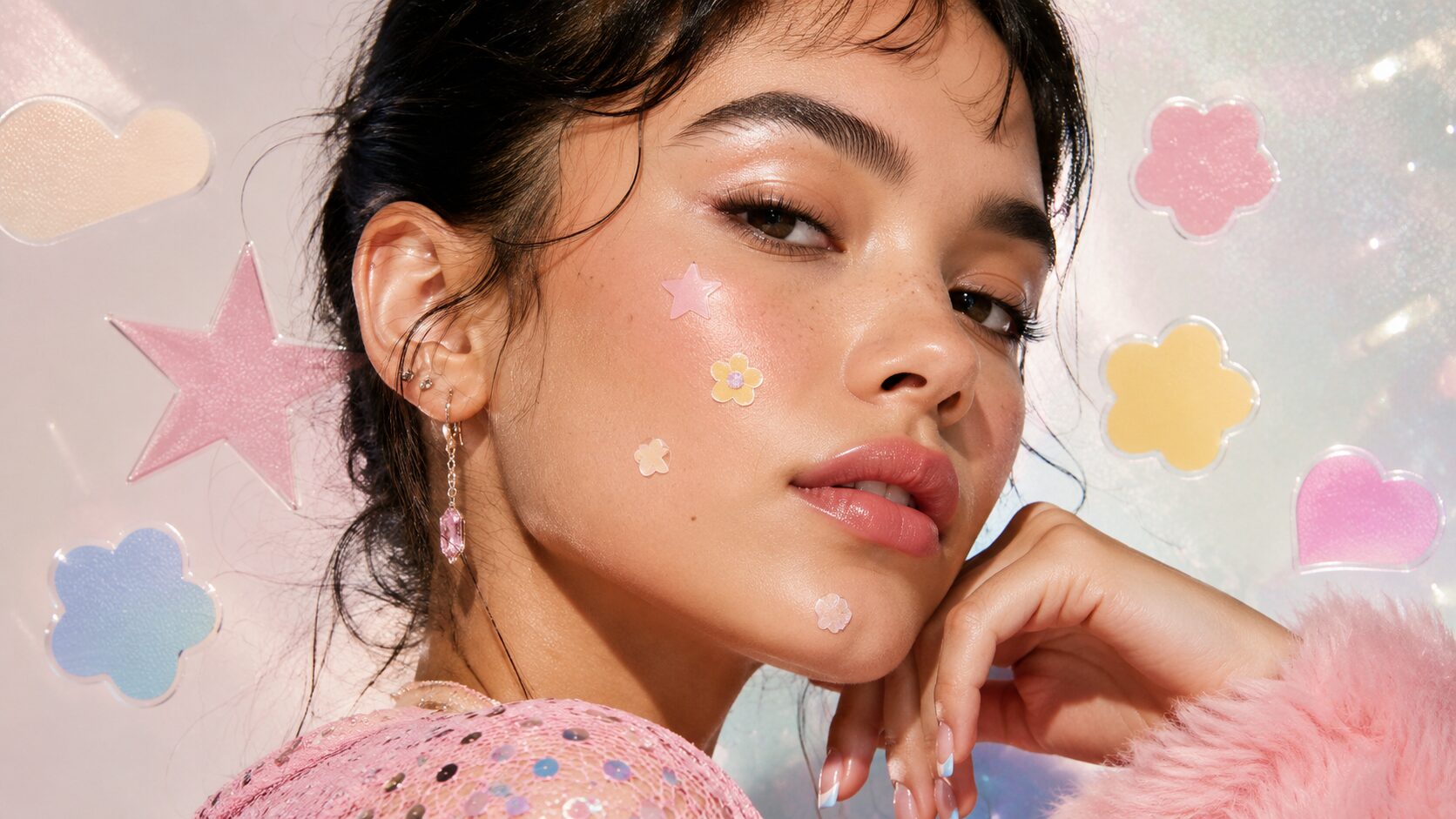
For years, the beauty world treated acne like a little scandal. A blemish appeared, and the mission was clear: cover it, calm it down, photograph from the other side, and pretend nothing happened. But the cultural mood around breakouts has changed dramatically. Today, a pimple patch is no longer just a tiny emergency tool hiding in a bathroom drawer. It has become a visible beauty signal, a Gen Z accessory, a celebrity-approved selfie detail, and, in some cases, the most interesting part of the whole look.
The shift did not happen overnight, but fashion and beauty magazines have been documenting it in real time. ELLE once framed Starface-style acne patches as “celeb-loved stars,” noting that Justin and Hailey Bieber had been seen wearing them across social media posts and paparazzi photos. The magazine also listed Kim Kardashian, Anne Hathaway, Florence Pugh, Addison Rae, Noah Beck, and PinkPantheress among the famous faces spotted with colorful patches.
Most importantly, ELLE quoted Starface founder Julie Schott on a bigger idea: what if acne were simply something that happens to human skin, rather than a flaw waiting to be edited out? That question is the heart of what many beauty fans now call “pimple positivity.”
The new beauty rule: if you cannot hide the breakout, style it
The Cut put the mood perfectly in its May 2026 feature, “Patch It Up,” with the subheadline: “Pimple patches can fix a bad breakout — or a boring outfit.” The article described how, since Starface launched in 2019, the way younger consumers treat acne has shifted from heavy concealer toward colorful, playful patches that treat the spot while making it part of the look. The piece also pointed out that the trend is not limited to teenagers; adults are increasingly joining in, helped by a wave of celebrity sightings from the Biebers and Anne Hathaway to Florence Pugh, Millie Bobby Brown, Travis Scott, and PinkPantheress.
That is what makes this trend more interesting than a normal skincare craze. A serum stays private. A cleanser disappears down the drain. A pimple patch sits on the face, right where everyone can see it. It becomes part of a school outfit, a coffee-run outfit, a festival outfit, a talk-show outfit, or a makeup-free Instagram Story. In other words, the patch has moved skincare from the private routine into the public performance of personal style.
This is why pimple positivity feels so current. It does not say acne is glamorous. It says acne is normal enough that it no longer has to ruin the mood. There is a big difference. The modern patch does not ask the wearer to pretend a blemish is not there; it lets them decide whether to make it invisible, cute, funny, colorful, or even intentionally eye-catching.
ELLE’s acne-positive message still feels fresh in 2026
The reason ELLE’s coverage continues to matter is that it connected the product trend to a cultural feeling. The magazine did not just talk about patches as a beauty deal or a celebrity product; it highlighted a deeper emotional shift around the “before and after” mindset that dominated beauty marketing for decades. Julie Schott’s point in ELLE was that many people grew up believing they were stuck in a flawed “before” state until their skin became clear enough to count as an “after.” Pimple positivity challenges that whole storyline.
In 2026, that message has become even more visible because the patch is now part of pop culture, not just skincare culture. The celebrity examples matter because famous people are usually expected to look polished, filtered, and camera-ready. When they wear visible acne patches in casual photos, public appearances, or social media posts, it changes the emotional temperature around breakouts. A blemish becomes less like a beauty failure and more like a relatable skin moment.
There is also a practical reason the trend has lasted. Hydrocolloid patches are not just decorative stickers. ELLE explained that hydrocolloid patches absorb fluid to reduce the appearance of redness and swelling while also helping prevent picking. That practical function gives the trend staying power: the patches are useful enough to belong in a routine, but expressive enough to belong in a photo.
Hailey and Justin Bieber brought the trend into festival culture
No celebrity couple has done more to make pimple patches feel pop-culture adjacent than Hailey and Justin Bieber. Vogue’s April 2026 Coachella coverage described “Bieberchella” as a full weekend moment: Justin on the main stage, Hailey hosting a Rhode World pop-up, friends in Bieber merch, and a couples pimple-patch collaboration folded into the festival atmosphere. Vogue also noted that Hailey’s look and the Rhode World palette leaned into bright, playful late-’90s color energy, connecting the beauty drop to the wider festival-fashion mood.
The timing was smart because Coachella is not just a music festival. It is a style broadcast. What appears there gets reposted, screenshotted, mood-boarded, and turned into a seasonal beauty reference. When pimple patches enter that environment, they stop feeling like something you wear only after washing your face at night. They become part of the “getting ready” fantasy: lip gloss, sunglasses, vintage slip dress, dewy skin, and maybe a tiny mushroom or daisy patch on the cheek.
Who What Wear reported that Rhode’s 2026 collaboration with Justin Bieber included Spotwear pimple patches in five exclusive shapes, including festival-inspired mushroom and daisy designs. The article also noted the Coachella timing, the limited-edition spring/summer designs, and functional details such as hydrocolloid material, sweat resistance, and a second-skin feel.
That combination is the whole story of acne patches right now. They must work, but they must also look like they belong in the user’s life. A patch that can sit through a workday is useful. A patch that can sit through a concert, a selfie, or a night out without feeling embarrassing is culturally powerful.
Anne Hathaway made pimple patches feel grown-up, not childish
One of the most charming celebrity pimple patch moments came from Anne Hathaway, who posted a makeup-free car selfie wearing star-shaped patches. InStyle covered the moment as the actress taking a Gen Z approach to acne, noting that she wore one pink and one blue star-shaped sticker while dressed casually in a sweater, denim cap, and sunglasses. Her caption, “Stars, they’re just like us,” turned the whole thing into a joke that felt polished, self-aware, and deeply relatable.
The Zoe Report described Hathaway’s patches as more than acne treatments, calling them colorful statement-makers that deserved to be seen rather than hidden. That framing matters because Hathaway is not positioned as a teen trend follower. She is an Oscar-winning actress with a broad audience, and her willingness to wear visible patches helped pull the trend out of the “only Gen Z would do this” category.
This is an important turning point for pimple positivity. When a young creator wears a neon patch, the internet may read it as youth culture. When Anne Hathaway does it, the look becomes adult, witty, and almost elegant. It tells older consumers that visible skincare does not have to feel silly. It can be a tiny act of humor, a way to handle a breakout without turning it into a crisis.
Selena Gomez turned a pimple patch into a punchline, and that made it cooler
Selena Gomez brought a different kind of energy to the trend when she posted a makeup-free selfie wearing a SpongeBob SquarePants-shaped pimple patch. InStyle reported that Gomez shared the bare-faced photo on Instagram and captioned it with the confidence-forward line, “Having one of those ‘I feel sexy’ days.” The contrast was perfect: a cartoon patch, a breakout, a makeup-free face, and a caption that refused to act embarrassed.
That moment explains why character patches work so well. A clear patch can quietly say, “I am taking care of my skin.” A cartoon patch says, “I am taking care of my skin, and I am not going to lose my sense of humor over it.” Gomez’s post also fits into the larger celebrity movement toward visible authenticity: less perfect glam all the time, more casual glimpses of real skin, messy moments, and ordinary beauty rituals.
Millie Bobby Brown made the patch talk-show friendly
Millie Bobby Brown gave the trend another boost by wearing a butterfly-shaped pimple patch during a makeup-free appearance on The Drew Barrymore Show. PEOPLE reported that Brown paired the patch with a cozy lilac outfit, glitzy earrings, a pearl choker, knee-high boots, and a messy bun. The result was casual but styled, fresh-faced but still camera-ready.
This kind of moment is different from a selfie because talk shows still carry a sense of public presentation. A celebrity appearing on camera without full glam already makes a statement; wearing a visible pimple patch adds another layer. It says the patch is not just for staying home. It can be part of a complete look, even under studio lights.
Why this celebrity trend feels emotionally different
Beauty trends usually work by aspiration: a celebrity wears something, and people want to copy it because it looks glamorous. Pimple patches work in a more interesting way because they combine aspiration with relief. When people see a celebrity wearing a patch, the thought is not only “I want that look.” It is also “Oh, they get breakouts too.”
That relatability is powerful because acne often carries a private emotional charge. People may know, rationally, that breakouts are common, but a visible blemish can still make them feel exposed. Pimple patches reverse that exposure. Instead of the blemish being the thing people notice, the patch becomes the thing people notice, and the emotional meaning changes from shame to choice.
The fashion logic behind acne patches
At first glance, pimple patches seem too small to count as fashion. But fashion is often about tiny decisions: the color of a hair clip, the shape of a nail tip, the charm on a phone case, the shade of a lip gloss. Pimple patches now live in that same visual world. They are small, graphic, and highly readable.
- ⭐ A star patch immediately communicates playfulness.
- 🌸 A flower patch feels softer.
- 💧 A clear patch suggests discretion.
- 👾 A cartoon patch turns skincare into a joke with a face.
The Cut’s styling angle is useful here because it treats patches as something people can choose based on context. The article suggests that embracing pimple patches does not have to be scary or overly bold; people can “choose your own adventure,” whether that means a seamless skin-toned option or a fun accessory-like patch.
Pimple positivity is not anti-makeup; it is anti-shame
One misunderstanding about pimple positivity is that it rejects makeup or polished beauty. It does not. In fact, many people who wear visible patches also love makeup, fashion, and getting ready. The difference is that acne is no longer treated as something that must be hidden before a person is allowed to participate in beauty.
That distinction is especially important in a social media culture where people are tired of unrealistic skin. Filters, editing, and heavy coverage can make normal texture seem unusual. Visible patches cut through that. They show that skincare is happening in real time, on real skin, in public.
Where the trend goes next
The next phase of pimple positivity will probably be less about whether people accept visible patches and more about how creatively they use them. Festival culture will keep pushing playful shapes and limited-edition graphics. Celebrity selfies will keep normalizing patches as everyday skincare accessories. Beauty magazines will continue treating acne patches as both functional products and styling details, because that dual identity is exactly what makes the category interesting.
The trend may also become more personalized. Instead of one universal patch style, people will likely build little “patch wardrobes” for different occasions: invisible patches for daytime errands, cute shapes for social media, stronger treatment patches for overnight use, and novelty designs for events. The same person may want all of those options because acne does not happen in just one context.
The tiny sticker with a big cultural message
The celebrity pimple patch trend is fun because it is cute, visual, and easy to talk about. But underneath the entertainment value, it says something meaningful about modern beauty. The patch has turned a private skin insecurity into a public styling choice. It has given people a way to care for a blemish without hiding their face. It has made acne feel a little less dramatic, a little less shameful, and a lot more human.
That is why pimple positivity is still gaining momentum in 2026. It is not only about stars, flowers, butterflies, SpongeBob stickers, or festival-ready designs. Those are just the visible symbols.
The real trend is the freedom to have a breakout and still feel stylish, funny, confident, and completely present.
Ningbo Alps Medical Technology Co., Ltd. 15 Years of Acne Patch Factory Manufacturing and Wholesale