How to Choose a Reliable Pimple Patch Manufacturer
_画板-1-1-300x300.png)
Alps Medical
15 Years of Acne Patch Factory Manufacturing and Wholesale
How to Choose a Reliable Pimple Patch Manufacturer
A practical sourcing guide for skincare brands, beauty startups, Amazon sellers, TikTok Shop brands, and retail buyers looking for private label acne patches.
Pimple patches may look simple — small, lightweight, easy to ship. But for a skincare brand, choosing the right manufacturer is not a small decision. A good partner helps you build comfort, adhesion, clean packaging, and long-term growth. A poor one creates expensive problems: weak adhesion, rough edges, unclear documentation, or compliance risk.
The global acne patch category has grown into a highly segmented beauty product. Some brands focus on invisible daytime patches, others create playful shapes like stars or hearts, and some develop microdart or ingredient-infused patches. The question today is no longer just “Can this factory make pimple patches?” but “Can this manufacturer help my brand create the right patch for the right customer, market, and price point?”
1. Start with the product type your brand actually needs
Before comparing manufacturers, define the product format clearly. Different formats require different materials, equipment, and quality standards.
- Traditional hydrocolloid patch – For surface-level blemishes, whiteheads, fluid absorption, easy everyday use.
- Invisible daytime patches – Thinner edges, better transparency, less shine; must stay put under makeup.
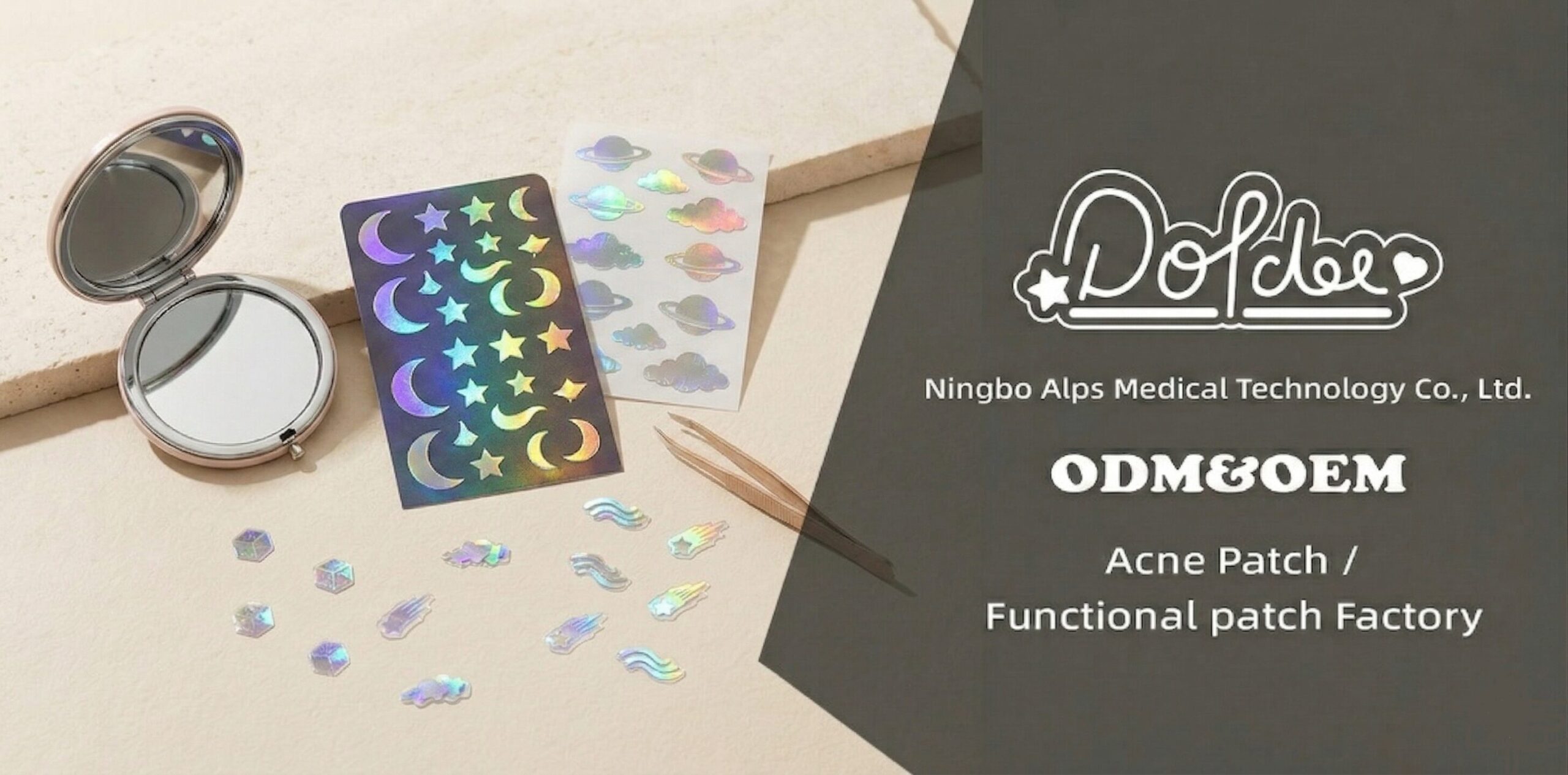
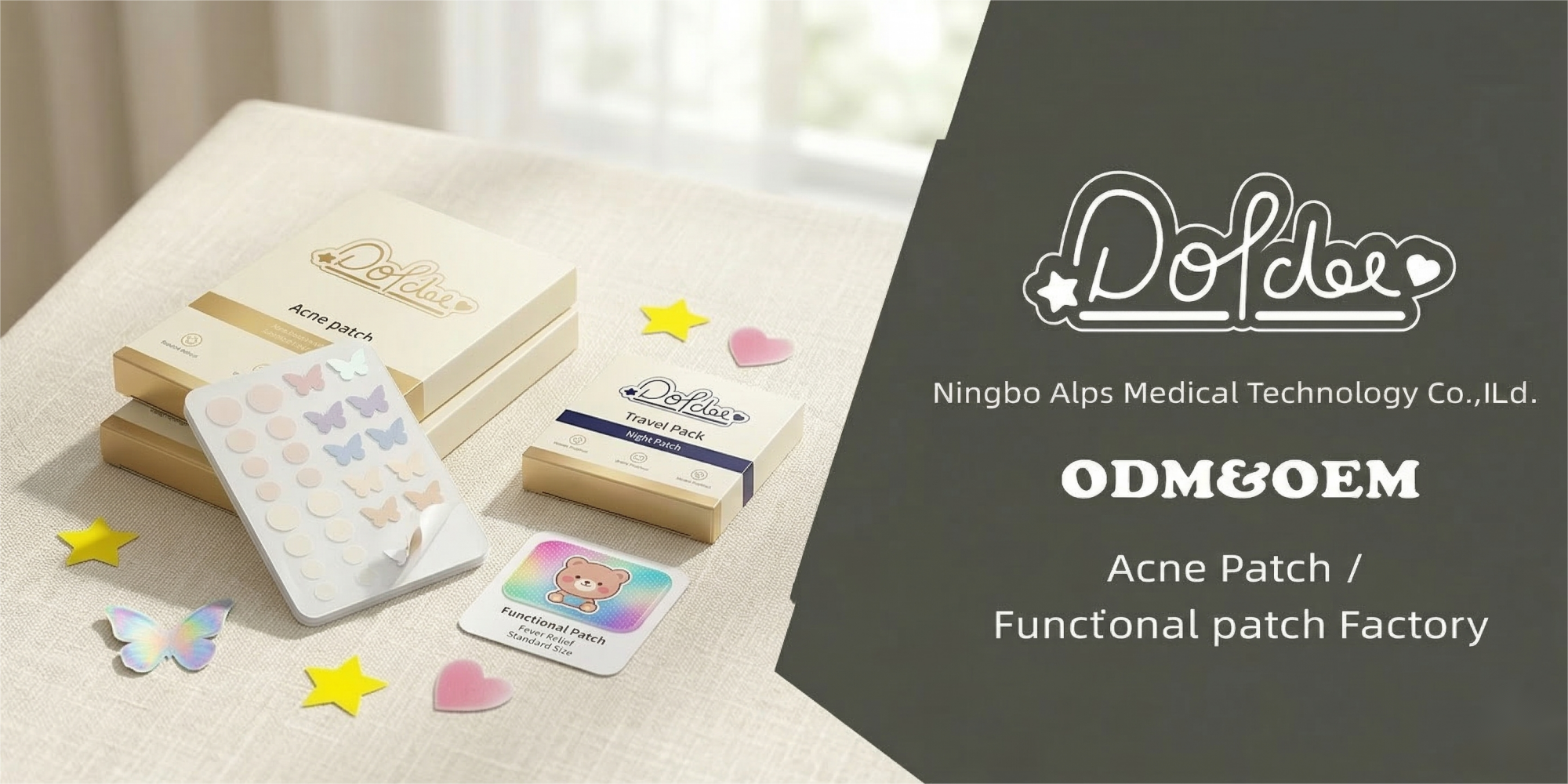
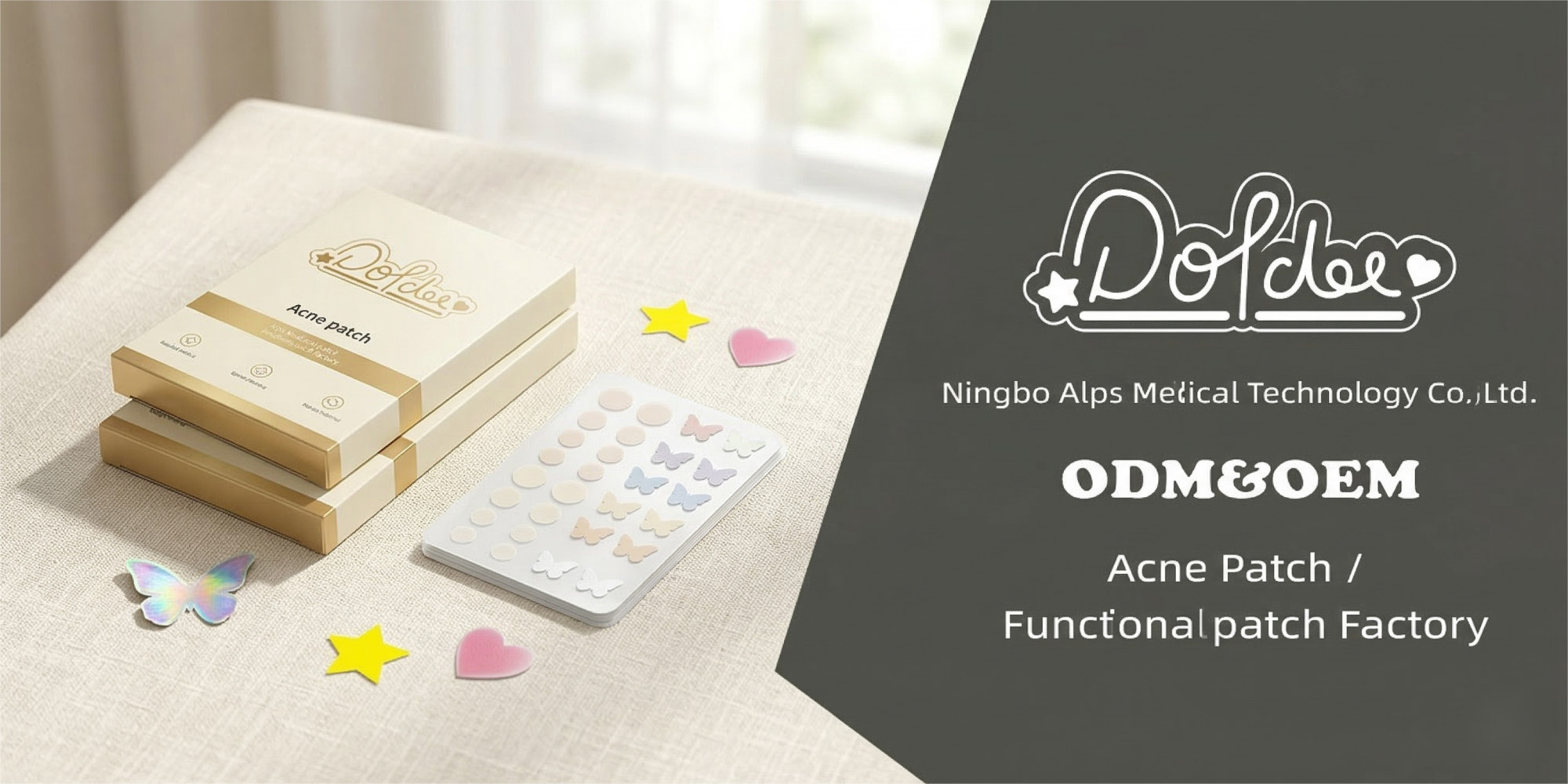
- Decorative/printed patches – Stars, hearts, flowers; visible wear that makes acne care feel expressive. Must still feel like skincare.
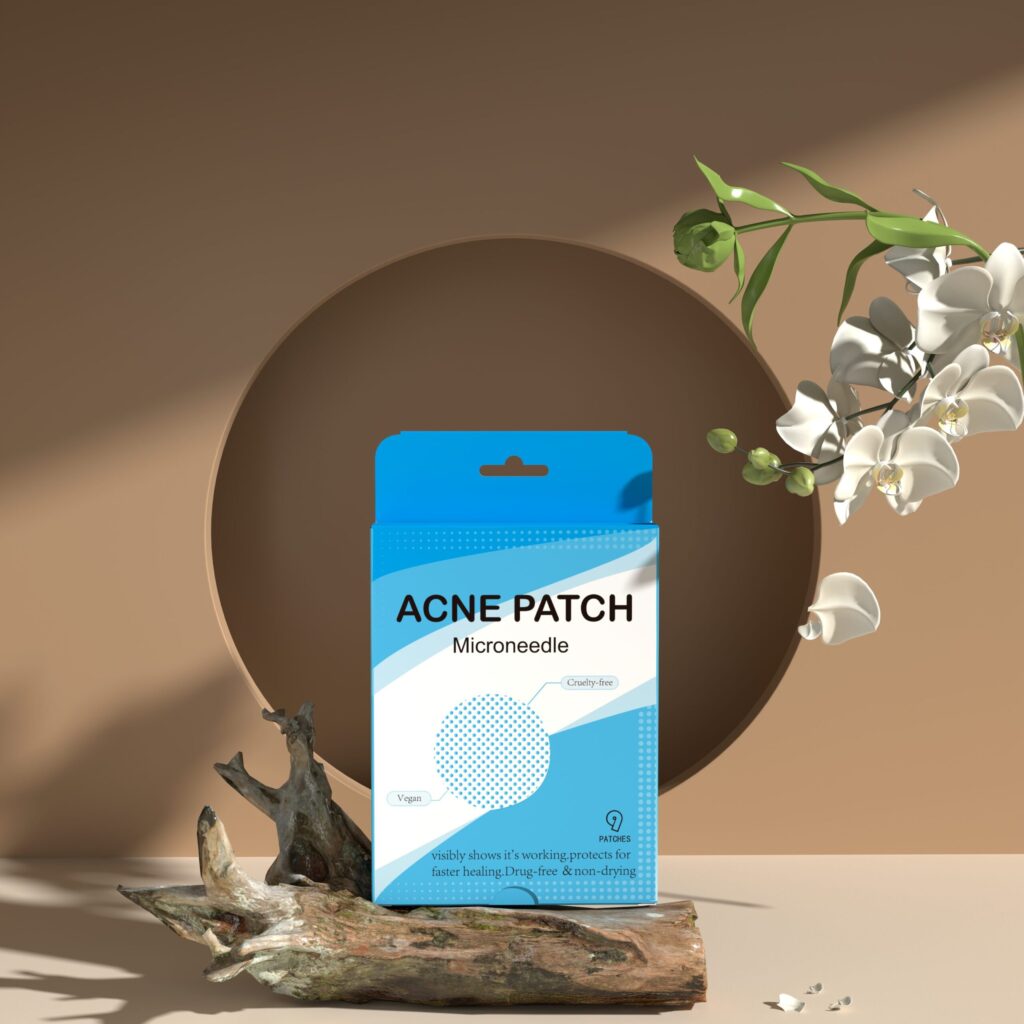
- Microdart / microneedle patches – For early-stage blemishes or targeted ingredient delivery; require stronger technical support.
Warning sign: If a supplier treats every pimple patch as the same product, that’s a red flag. A reliable manufacturer should explain these differences clearly.
2. Evaluate the manufacturer’s material knowledge
Material quality is everything. Ask about base material, adhesive system, thickness range, transparency, absorbency, wear time, and skin compatibility.
Good questions include: Is the edge beveled? How does it perform on oily skin? Does it leave residue? Can it be matte vs glossy? Can samples with different adhesion levels be provided?
A strong manufacturer explains in measurable terms and is honest about trade-offs — e.g., ultra-thin may be harder to handle, stronger adhesive may not suit sensitive skin.
3. Check quality control beyond the sample
Many suppliers can make an attractive sample. The real test is consistency at scale. Ask how they control thickness, cutting accuracy, adhesion, seal strength, and contamination risk.
Look for inspection steps covering incoming materials, in-process, finished goods, and packaging. For custom printed patches, also check color consistency, alignment, and whether printing affects flexibility.
Tip: “What do you check before shipping?” The answer tells you a lot about their quality culture.
4. Review certifications and manufacturing standards
Certifications don’t guarantee perfection, but they indicate quality system awareness. Look for ISO 22716 (cosmetic GMP), ISO 9001, GMP documentation, MSDS/SDS, COA, and relevant testing reports.
For the U.S. market, remember that acne treatment claims can move a product into drug territory under FDA definitions. A responsible manufacturer won’t casually promise every formula can be sold everywhere with the same label.
5. Make sure the manufacturer understands claim risk
Overly aggressive claims (curing acne, eliminating bacteria, replacing medication) can create compliance risk, especially in the U.S. and EU. Safer language focuses on physical/cosmetic support: absorbing fluid, protecting blemishes, covering spots, reducing picking.
Ask if the manufacturer can customize claims, warnings, ingredient lists, and label layout to match your regulatory needs — don’t assume ready-made packaging copy is compliant.
6. Look for real customization capability, not only logo printing
“Custom” can mean very different things. Beyond logo placement, real customization includes patch shape, size, sheet layout, backing film, pouch style, compact case, and full product line planning.
Ask what requires a mold fee, printing plate, or longer lead time. A strong manufacturer helps you match the product to your market strategy — whether TikTok visual appeal, dermatology-style simplicity, or Amazon-ready information graphics.
7. Study packaging capability carefully
Packaging can make a decent patch feel trustworthy — or cheap. Common formats: individual sachets, paper envelopes, color boxes, compact cases, display boxes, bundles.
Ask about in-house vs. partner packaging, printing quality, MOQ, dielines, barcode placement, batch coding, and whether they can support artwork review. For e-commerce, packaging must also photograph well and communicate the product type at a glance.
8. Ask about sampling, testing, and revision process
Never skip sampling for custom shapes, printed patches, or new packaging. Check: adhesion on clean dry skin, edge lifting, comfort after hours, shine level, print sharpness, peel-from-liner ease, and real-life box appearance.
Request physical printed samples when possible — screen colors differ from printed results. Also ask about stability or packaging compatibility checks if selling via Amazon FBA or international distributors.
9. Understand MOQ, lead time, and cost structure
Lowest unit price isn’t always best. Request a clear quotation separating patch cost, pouch cost, box cost, design/plate fees, mold fees, samples, testing, and shipping. This helps you compare suppliers accurately.
Ask if they can support a lower first order for market testing, then scale. Reliable manufacturers are transparent about what affects price and time.
10. Evaluate communication quality
Pay attention from the first conversation: Do they ask about your market, target customer, platform, patch type, and packaging preference? Or do they just send a generic price list? Good communication is organized, documented, and proactive in reducing risk.
11. Watch for red flags
- × Refuses to provide samples
- × Cannot explain material differences
- × No clear quality control process
- × Unrealistic claims (e.g., “FDA approved” for a cosmetic)
- × Copies famous brand designs too closely
- × Suspiciously low prices without transparency
- × Avoids questions about documentation
A red flag isn’t always a dealbreaker immediately, but it’s a reason to ask more questions.
12. Build a manufacturer checklist before ordering
Your checklist should cover: product type, patch size, material, thickness, shape, color, printing, backing film, pouch style, patch count, packaging structure, artwork, claims, ingredients, directions, warnings, batch coding, certificates, testing documents, MOQ, lead time, payment terms, inspection process, and shipping.
Also include brand-specific details: target market, platform, price point, customer age group, and launch channel. The clearer your project definition, the easier the choice.
Final thoughts: the right manufacturer helps you build more than a patch
Choosing a pimple patch manufacturer is about finding a partner who understands skincare materials, quality consistency, packaging, regulatory sensitivity, and the way modern acne care is evolving.
Today’s market has invisible patches, cute colorful shapes, advanced microdart patches, and simple daily-use options. A reliable manufacturer helps you navigate these choices and turn your brand idea into a stable, market-ready product.
The best choice is usually not the cheapest — it’s the manufacturer who answers clearly, provides consistent samples, supports documentation, respects compliance, communicates well, and can scale with your brand.
— Designed for clear B2B evaluation · Copy-ready for Elementor —
More News
Ready to start your acne patch business? Whether you need custom formulas, private label packaging, or free samples, our team is just one message away.
*We takes your privacy very seriously. All information is only used for technical and commercial communication and will not be disclosed to third parties.
Let’s Create Your Custom Acne Patch Line
Take your skincare brand to the next level with our customized acne patch solutions. Every product we make is built on precision, performance, and partnership — helping you deliver real results that reflect your brand’s quality and care.
_画板-1-e1760947912226.png)
Ningbo Alps Medical Technology Co., Ltd. 15 Years of Acne Patch Factory Manufacturing and Wholesale
©2026All Rights Reserved.
Product
Quick Links
Get In Touch
Xingwen Future Technology City, No. 1001 Tanjiang North Road, Shounan Subdistrict, Yinzhou District, Ningbo City