How to Choose a Reliable Pimple Patch Manufacturer for Your Skincare Brand
_画板-1-1-300x300.png)
Alps Medical
15 Years of Acne Patch Factory Manufacturing and Wholesale
How to Choose a Reliable Pimple Patch Manufacturer for Your Skincare Brand
A practical sourcing guide for skincare brands, Amazon sellers, TikTok Shop brands, beauty startups, and retail buyers.
Pimple patches may look simple from the outside. They are small, lightweight, easy to ship, and usually made from thin hydrocolloid material. But for a skincare brand, choosing a pimple patch manufacturer is not a small decision. The wrong supplier can create problems that show up quickly: weak adhesion, thick edges, poor cutting accuracy, messy packaging, inconsistent patch placement, unclear documentation, delayed delivery, or product claims that create compliance risk.
The pimple patch market has also become much more competitive. A few years ago, many buyers only needed a basic round hydrocolloid patch. Today, the category includes invisible daytime patches, overnight hydrocolloid patches, printed patches, star and heart-shaped patches, microdart patches, dark spot aftercare patches, compact-case patches, and character-style limited editions. Brands are no longer just asking, “Can you make acne patches?” They are asking, “Can you help us create a product that fits our market, customer, platform, packaging style, and price point?”
1️⃣ Know what type of pimple patch you want to launch
Before contacting suppliers, define your product direction clearly. Not all pimple patches are the same, and each type has different production requirements.
The most common option is a hydrocolloid pimple patch. It is usually used for surface-level blemishes, especially whiteheads or pimples that have come to a head. Hydrocolloid material absorbs fluid and creates a protective layer over the spot, which can also help reduce touching and picking. This type is popular because it is easy to understand and suitable for everyday spot care.
Invisible daytime patches are designed to be worn outside the home. They need thin edges, a matte or low-shine finish, good transparency, and comfortable adhesion. A daytime patch must not look too thick under makeup or lift easily around the edges.
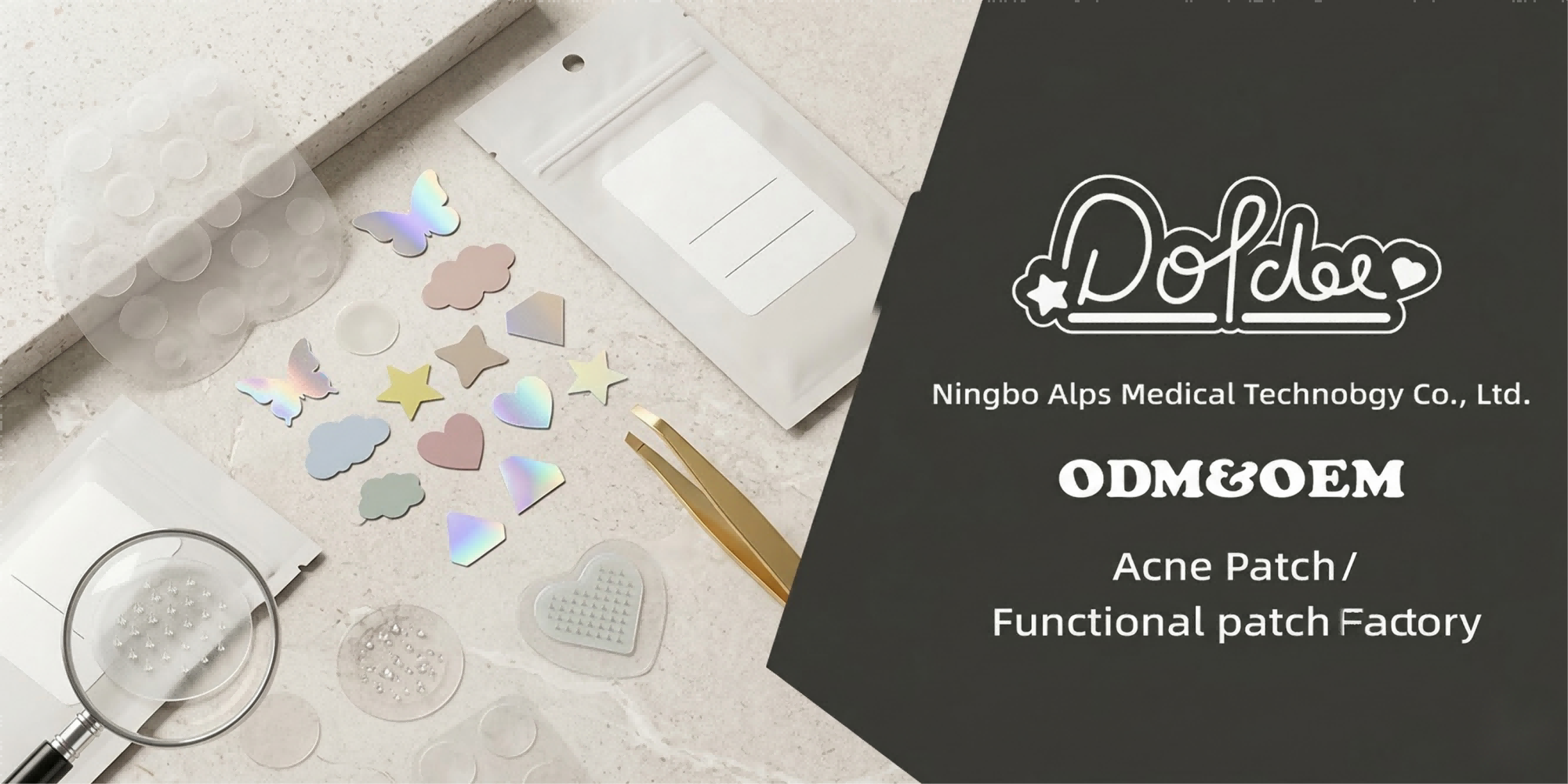
Decorative pimple patches are designed to be seen. Stars, hearts, flowers, clouds, butterflies, fruit shapes, and cute printed designs are popular because they turn acne care into a more playful beauty moment. However, decorative patches must still feel like skincare products, not ordinary stickers. The material should be soft, flexible, skin-friendly, and properly cut.
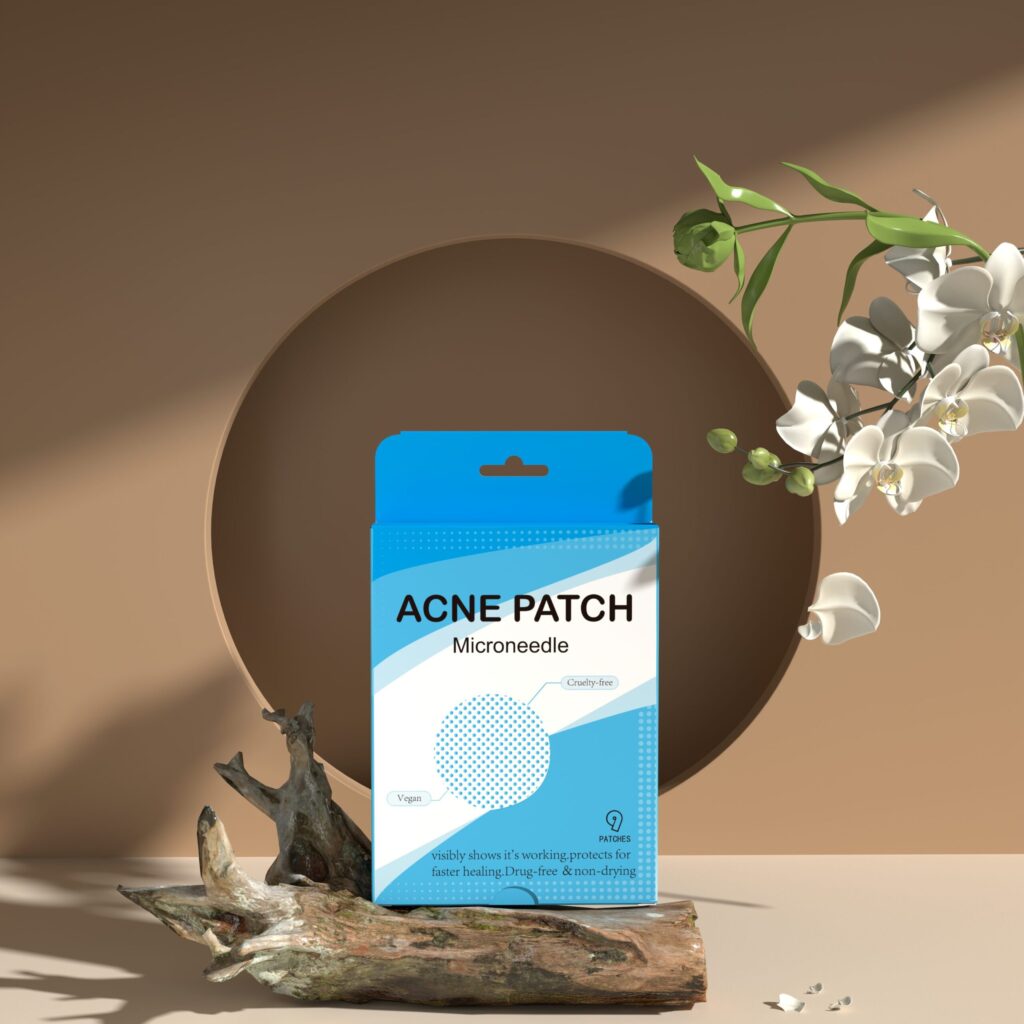
Microdart or microneedle-style patches are more technical. They are often used for early-stage blemishes or ingredient delivery. These patches require stronger R&D support, ingredient control, stable mold production, and more careful documentation. If your brand is new to acne patches, it may be easier to start with hydrocolloid patches before expanding into microdart products.
A reliable manufacturer should be able to explain these categories clearly. If a supplier treats every patch as the same product, it may not be the right partner for a serious skincare brand.
2️⃣ Check the manufacturer’s material knowledge
Material quality is one of the most important parts of a pimple patch. A patch can have beautiful packaging, but if it feels thick, stiff, shiny, weak, or uncomfortable, customers will not repurchase it.
Ask the manufacturer about the hydrocolloid material, patch thickness, absorbency, transparency, adhesive strength, backing film, and expected wear time. For an invisible patch, ask whether the edges are tapered. For an overnight patch, ask whether the adhesion can last through sleep. For printed patches, ask whether the printed surface affects flexibility, comfort, or adhesion.
Good questions include:
- What is the thickness of the patch?
- Is the edge tapered or flat cut?
- Is the finish glossy or matte?
- How long can the patch stay on clean, dry skin?
- Does it leave adhesive residue?
- Can it be worn under makeup?
- Can the material be customized for stronger adhesion?
- Can the patch be made in different sizes and shapes?
- Can printed patterns be added without making the patch feel like a sticker?
A professional manufacturer should answer with details, not just say “high quality.” It should also be honest about trade-offs. For example, an ultra-thin patch may look more invisible but may be harder to peel from the backing film. A stronger adhesive may be better for overnight use but not ideal for very sensitive skin. A printed patch may look cute but requires more careful testing for flexibility and surface feel.
3️⃣ Do not judge only by the sample
Samples are important, but mass production is the real test. Many factories can make a good sample. Fewer can keep the same quality across thousands or millions of patches.
When reviewing a manufacturer, ask how it controls cutting accuracy, thickness consistency, patch placement, pouch sealing, printing alignment, and finished product inspection. Small quality problems can damage the customer experience. If the patch edge is rough, it may look cheap. If the adhesive is uneven, it may lift too soon. If the patch is placed unevenly on the sheet, the product may look unprofessional. If the pouch seal is weak, it may affect storage and customer trust.
For custom printed patches, quality control should include color consistency, pattern clarity, die-cut accuracy, and whether the design remains clean after peeling. For retail packaging, quality control should include color box printing, barcode placement, lot number printing, patch count, pouch count, and carton durability.
Ask the supplier: “What inspection steps do you perform before shipping?” A reliable manufacturer should be able to describe incoming material inspection, in-process inspection, final inspection, and packaging checks.
4️⃣ Review certifications and quality systems
Certifications do not guarantee a perfect product, but they help show whether a manufacturer understands quality management. For pimple patches and skincare-related products, buyers often ask for documents such as ISO 22716, ISO 9001, GMP-related documents, MSDS/SDS, COA, material specifications, and testing reports.
ISO 22716 is especially relevant because it provides GMP guidelines for cosmetic production, control, storage, and shipment. A manufacturer with a structured quality system is usually better prepared to support international private label projects.
For buyers selling in the U.S., EU, UK, Amazon, TikTok Shop, or retail channels, documentation can become very important. Different markets and platforms may ask for different information. A reliable supplier should be able to provide clear documents and should not avoid questions about materials, ingredients, production standards, or quality control.
Be careful with vague phrases such as “FDA approved factory” or “FDA approved cosmetic.” In the U.S., cosmetic products and ingredients generally do not require FDA premarket approval, except color additives, but cosmetic businesses still need to follow applicable laws and regulations. A responsible manufacturer should not use misleading language to sound more compliant than it is.
5️⃣ Understand cosmetic, drug, and claim risks
One of the biggest mistakes in acne patch sourcing is ignoring product claims. The same patch may be treated differently depending on ingredients, labeling, and marketing language.
A plain hydrocolloid patch positioned as a blemish cover or spot care patch is different from a medicated acne treatment patch that claims to treat acne with active ingredients. In the U.S., the FDA looks at intended use when deciding whether a product is a cosmetic, a drug, or both. Claims such as “treats acne,” “kills acne bacteria,” “cures pimples,” or “heals cystic acne” can create higher regulatory risk.
Safer wording for a non-medicated hydrocolloid patch often focuses on physical and cosmetic support, such as:
- Helps absorb fluid
- Protects blemishes from touching
- Covers spots
- Helps reduce picking
- Creates a protective barrier
- Supports a cleaner-looking spot care routine
Higher-risk wording may include:
- Cures acne
- Treats severe acne
- Kills acne-causing bacteria
- Heals cystic acne
- Replaces acne medication
- Eliminates breakouts overnight
If your product contains salicylic acid, benzoyl peroxide, sulfur, or other active acne ingredients, you need to review the regulatory requirements for your target market carefully. A good manufacturer can provide documents and ingredient information, but brands should still work with qualified regulatory professionals before finalizing labels and claims.
A manufacturer that encourages exaggerated claims may create risk for your brand. A reliable manufacturer should help you develop realistic, market-appropriate wording.
6️⃣ Check whether customization is truly possible
Many suppliers say they offer custom pimple patches, but customization can mean different things. Basic customization may only include adding your logo to a pouch or changing the outer box design. Advanced customization may include patch shape, patch size, sheet layout, backing film, printed pattern, pouch structure, compact case, color box, retail display, ingredient concept, and full product line planning.
Ask what can actually be customized and what requires additional MOQ, mold fees, printing plate fees, sampling time, or testing. For example, custom star or heart shapes may be relatively easy, but highly detailed character silhouettes may be harder to cut cleanly. Multi-color printed hydrocolloid patches may require more testing than clear patches. A custom compact case may involve a separate packaging supplier and a longer development timeline.
Good manufacturers should guide you toward practical choices. A startup brand may begin with a clear overnight patch, an invisible daytime patch, and one cute printed style. A TikTok-focused brand may need colorful patches and highly visual packaging. A dermatology-style brand may prefer clear patches, clinical packaging, and simple claim language. An Amazon brand may need clear instructions, strong images, and bundle-friendly packaging.
Real customization is not just making the product look different. It is matching the product to the customer, sales channel, and brand positioning.
7️⃣ Study packaging capability carefully
Packaging is critical because pimple patches are small products. Good packaging can make a patch feel premium, hygienic, giftable, clinical, cute, or social-media-friendly. Poor packaging can make even a good patch feel cheap.
Common packaging options include individual foil sachets, paper envelopes, color boxes, hanging boxes, compact cases, refill packs, retail display boxes, and bundle sets. Each format has a different purpose. Foil sachets are practical and hygienic. Color boxes work well for Amazon and retail. Compact cases feel more premium and collectible. Envelopes can be lightweight and cute. Display boxes are useful for offline stores.
Ask whether packaging is made in-house or through a partner factory. Ask about MOQ, printing quality, material options, pouch seal testing, batch coding, barcode placement, dieline support, and artwork review.
Packaging should not only look good. It should also communicate clearly. A good package should show product type, patch count, usage directions, ingredients, warnings if needed, country of origin, responsible company information, batch number, and other market-specific information. For e-commerce, the packaging should also photograph well. The front panel should quickly explain the product, while the back panel should make usage and claims easy to understand.
A reliable manufacturer should help avoid common packaging problems such as tiny unreadable text, poor translation, weak pouch seals, unclear patch count, overclaiming, and box structures that get damaged during shipping.
8️⃣ Ask for a clear sampling and revision process
Never skip sampling, especially for custom shapes, printed patches, new packaging, or private label projects. A good sample process helps prevent expensive mistakes before mass production.
During sample review, test the product like a real customer. Is the patch easy to peel from the backing film? Does it stick well to clean, dry skin? Does it lift after several hours? Is it too shiny? Is it comfortable? Is the printed design sharp? Does the patch feel soft or plasticky? Does the pouch open cleanly? Does the color box look premium in real photos?
Ask the manufacturer how many sample rounds are available, how long sampling takes, and whether pre-production samples will be provided before mass production. For custom packaging, physical printed samples are much better than digital mockups. Colors often look different on screen compared with printed paper, foil, or film.
For larger orders, ask whether the manufacturer can provide final production samples before shipment. This gives you one more chance to confirm size, color, packaging, count, and overall appearance.
9️⃣ Compare cost structure, not just unit price
The lowest unit price is not always the best deal. A cheap patch can become expensive if it causes complaints, returns, packaging problems, or launch delays.
Ask for a quotation that separates material cost, patch count, pouch cost, box cost, printing cost, mold fee, sample fee, testing fee, and shipping terms if possible. This makes supplier comparison much easier.
MOQ can vary depending on product type. Standard clear hydrocolloid patches may have a lower MOQ. Custom printed patches, custom shapes, compact cases, and special packaging may require higher MOQ. Packaging materials often have their own MOQ because printed pouches and boxes are produced separately.
Lead time also matters. Ask for separate timelines for sample development, artwork confirmation, material preparation, mass production, quality inspection, and shipping. If a supplier promises an unrealistically fast timeline for a highly customized product, ask more questions.
Reliable manufacturers are transparent about what affects cost and time. They help you plan instead of surprising you later.
🔟 Evaluate communication quality
Communication is one of the most important signs of reliability. A manufacturer may have good equipment, but if communication is slow or unclear, the project can become difficult.
Pay attention from the first conversation. Does the supplier ask about your target market, sales channel, customer group, patch type, packaging style, and claim direction? Or does it only send a generic price list? Does it answer technical questions clearly? Does it provide real photos, sample options, specifications, and production details? Does it explain limits honestly?
For international sourcing, written confirmation is very important. Product specifications, artwork files, sample approvals, quotation terms, payment terms, lead time, inspection standards, and shipping details should all be documented. Miscommunication can lead to wrong patch count, wrong pouch size, wrong artwork, wrong claim wording, or wrong packaging structure.
The best manufacturers act like development partners. They help reduce risk, not just accept orders.
1️⃣1️⃣ Watch for red flags
Some warning signs are obvious. Be careful if a manufacturer refuses to provide samples, cannot explain material differences, avoids documentation questions, copies famous brand designs too closely, offers suspiciously low prices, or encourages unrealistic acne claims.
Other red flags are more subtle. A supplier may show beautiful renderings but no real production photos. It may claim that all products are “FDA approved.” It may say every ingredient, claim, and packaging style is suitable for every market. It may promise custom printed patches with very low MOQ and no discussion of testing, color consistency, or cutting accuracy.
Also be careful with intellectual property. Cute pimple patches are popular, but directly copying famous brands, characters, or protected designs can create legal risk. A reliable manufacturer should support original design development instead of pushing imitation.
If something sounds too easy, too fast, or too cheap, ask more questions.
1️⃣2️⃣ Prepare a manufacturer checklist before ordering
Before placing an order, prepare a clear checklist. This helps both your team and the supplier avoid misunderstandings.
Your checklist should include:
- Product type
- Patch material
- Patch size
- Patch thickness
- Patch shape
- Patch color or transparency
- Printed pattern, if any
- Backing film type
- Sheet layout
- Patch count per sheet
- Pouch material
- Box structure
- Retail packaging size
- Ingredient list
- Directions for use
- Warnings
- Claims
- Batch coding
- Barcode requirements
- Certifications and documents
- MOQ
- Sample timeline
- Production timeline
- Inspection standard
- Shipping terms
You should also define your sales channel. A product for Amazon may need clear packaging and strong product images. A product for TikTok Shop may need visual impact and demonstration-friendly features. A product for drugstores may need retail shelf clarity. A product for a skincare clinic may need a more professional, simple look.
The clearer your project brief is, the easier it is to find the right manufacturer.
Final thoughts: choose a manufacturer who understands the whole product
Choosing a pimple patch manufacturer is not just about finding someone who can cut hydrocolloid material into small circles. It is about finding a partner who understands skincare quality, material performance, packaging, documentation, customization, compliance sensitivity, and modern acne care trends.
Today’s pimple patch market has many directions. Some customers want invisible patches for daytime wear. Some want cute patches that make breakouts feel less embarrassing. Some want overnight hydrocolloid patches. Some want microdart patches for early-stage spots. Some want collectible packaging for social media. A reliable manufacturer should help you choose the right direction instead of offering the same product to every buyer.
The best manufacturer is not always the cheapest one. It is the one that can provide consistent quality, clear communication, realistic customization, proper documentation, stable packaging, and honest guidance.
In a competitive skincare market, small details matter. Patch thickness, edge design, adhesion, transparency, cutting accuracy, pouch seal, packaging copy, and delivery reliability all affect customer trust.
Choose a manufacturer that treats those details seriously, and your pimple patch line will have a much stronger foundation from the first order. ✨
More News
Ready to start your acne patch business? Whether you need custom formulas, private label packaging, or free samples, our team is just one message away.
*We takes your privacy very seriously. All information is only used for technical and commercial communication and will not be disclosed to third parties.
Let’s Create Your Custom Acne Patch Line
Take your skincare brand to the next level with our customized acne patch solutions. Every product we make is built on precision, performance, and partnership — helping you deliver real results that reflect your brand’s quality and care.
_画板-1-e1760947912226.png)
Ningbo Alps Medical Technology Co., Ltd. 15 Years of Acne Patch Factory Manufacturing and Wholesale
©2026All Rights Reserved.
Product
Quick Links
Get In Touch
Xingwen Future Technology City, No. 1001 Tanjiang North Road, Shounan Subdistrict, Yinzhou District, Ningbo City