Beyond the Base Formula: Active Ingredient Decisions for Private Label Buyers
_画板-1-1-300x300.png)
Alps Medical
15 Years of Acne Patch Factory Manufacturing and Wholesale
Beyond the Base Formula: Active Ingredient Decisions for Private Label Buyers
Most private label blemish patch projects start with the same question: can we make it better than basic hydrocolloid? The base formula absorbs fluid. It works. But when a buyer considers adding active ingredients, the project shifts dramatically.
Adding salicylic acid, niacinamide, or tea tree oil touches compliance, cost, lead time, and claims language. This article walks through the ingredient decisions that matter, what changes operationally, and where the tradeoffs land for most brand launches.
When Basic Hydrocolloid Is Not Enough
Plain hydrocolloid patches sit in a comfortable regulatory space. They are cosmetic-grade devices that absorb exudate without making treatment claims. For entry-level retail shelves, hydrocolloid alone often does the job. But consumers increasingly expect more. Search interest in active-enhanced patches continues to grow. The decision to move beyond basic hydrocolloid is rarely just about performance; it is about brand positioning and claims support.
What Ingredients Actually Change
Adding an active ingredient means embedding it within or coating it onto the hydrocolloid matrix. This changes formulation chemistry, regulatory classification, and cost.
Salicylic Acid
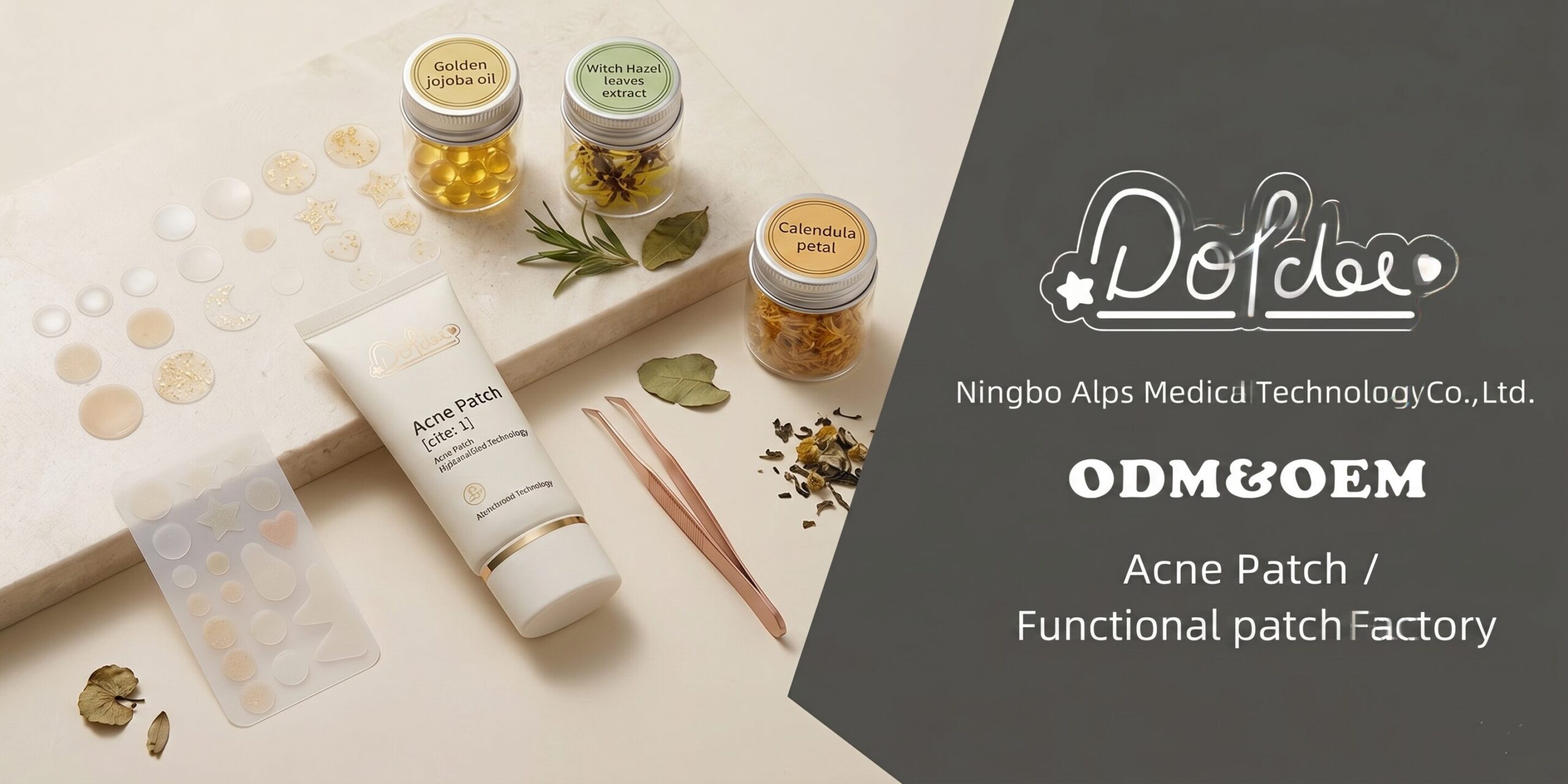
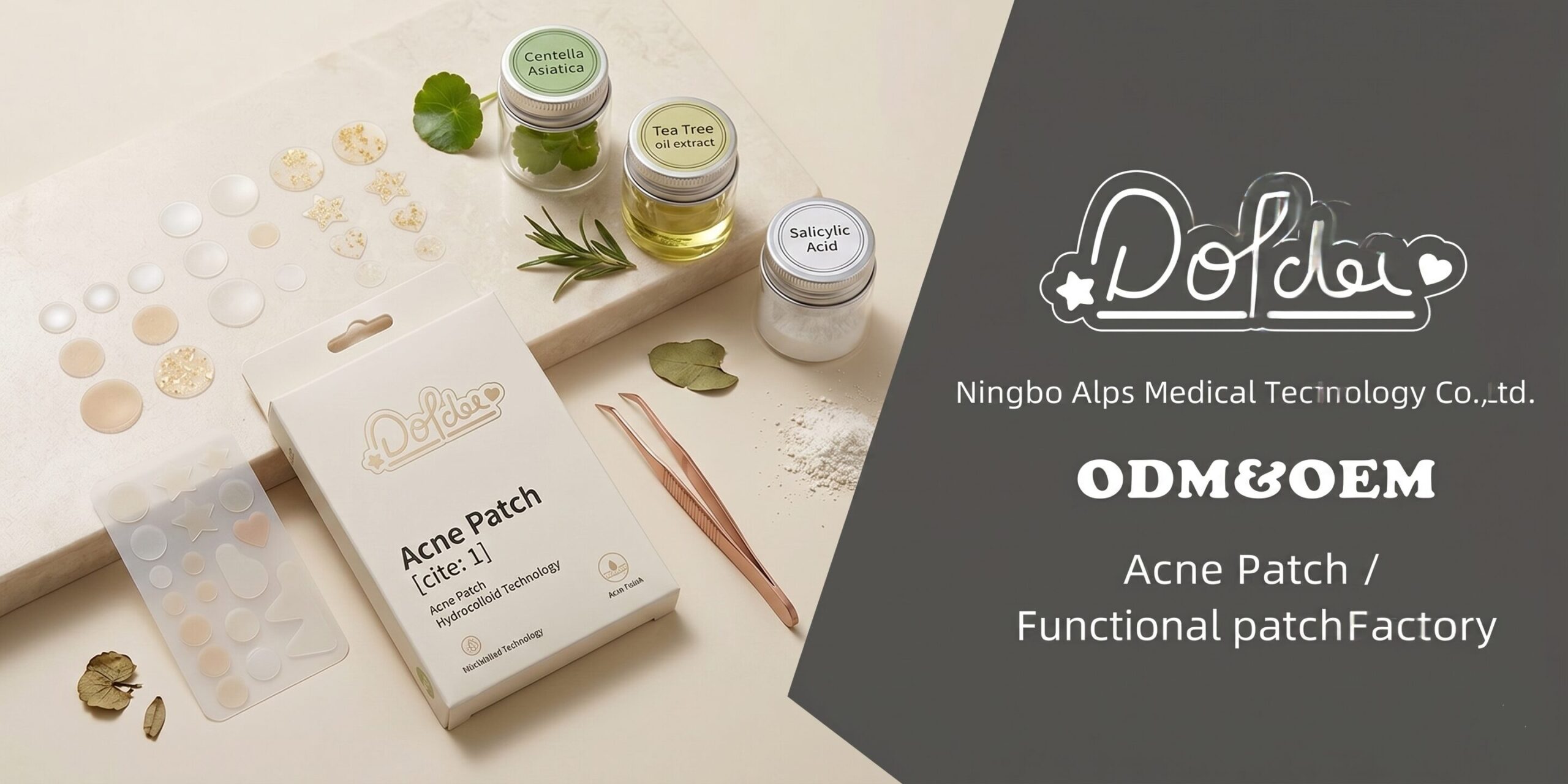
Works to clear pores (0.5% – 2%). In the US, hitting 0.5% moves the product toward OTC drug classification, requiring FDA facility registration. It also demands careful pH balancing for stability.
Niacinamide & Centella
Popular for post-spot brightening and skin calming. Fits comfortably within cosmetic classification, offering differentiation without heavy regulatory complexity.
Microneedle Formats
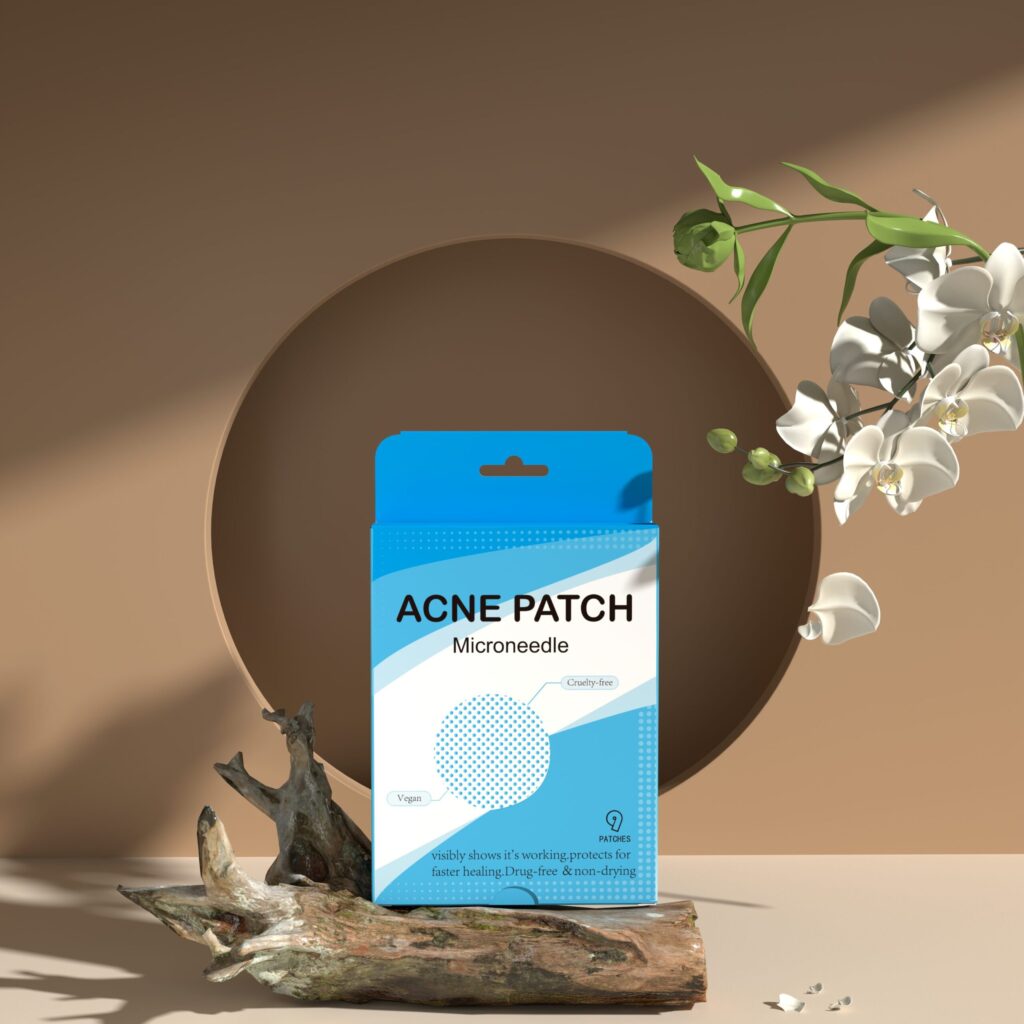
A premium segment delivering actives beneath the surface. Costs 3x to 5x more and requires specialized manufacturing capabilities.
The Formulation Brief: What Suppliers Need
A supplier cannot give an accurate quote without understanding your priorities. Decide on:
- ✔ Primary Ingredient: Treatment-led (salicylic) vs. gentle/brightening (niacinamide).
- ✔ Concentration Range: Flexibility speeds sampling; exactness targets cost.
- ✔ Claims Direction: “Absorbs fluid” (cosmetic) vs. “treats spots” (OTC pathway). Outline your artwork fonts (Shift+Ctrl+O) to ensure claims print flawlessly.
- ✔ Target Market: US, EU, or global. Rules differ for the same ingredient concentration.
Cost and Timeline Tradeoffs
Ingredient selection directly affects your project economics and time to market.
| Formulation Type | Cost Added | Sample Timeline Added | Regulatory Complexity |
|---|---|---|---|
| Plain Hydrocolloid | Baseline | Standard | Low (Cosmetic) |
| Niacinamide | +10% to 20% | +1 to 2 weeks | Low to Med (Cosmetic) |
| Tea Tree Oil | +15% to 25% | +2 to 3 weeks | Med (Verify limits) |
| Salicylic Acid (0.5%+) | +20% to 35% | +3 to 5 weeks | Med to High (OTC pathway) |
| Microneedle | +150% to 300% | +4 to 8 weeks | High (Specialized) |
Frequently Asked Questions
Can I add multiple active ingredients to one formulation?
Yes, but it adds complexity. A single hero ingredient is easier to stabilize and communicate. Multi-ingredient patches work best when suppliers have stable prior data.
Does adding salicylic acid always require FDA registration?
Not always. At or above 0.5%, it enters OTC drug territory. Below that, with no treatment claims, it can remain cosmetic. Your packaging claims matter as much as the ingredient level.
What is the MOQ for active-infused patches?
MOQs are typically similar to plain hydrocolloid: 3,000 to 5,000 units for ODM (stock formula with branding) and 10,000+ for fully custom OEM formulations.
Can I switch formulas for my second order?
Yes, but it requires a new sample run and updated documentation. Upgrading to an enhanced formula is a natural next step after validating initial demand.
More News
Ready to start your acne patch business? Whether you need custom formulas, private label packaging, or free samples, our team is just one message away.
*We takes your privacy very seriously. All information is only used for technical and commercial communication and will not be disclosed to third parties.
Let’s Create Your Custom Acne Patch Line
Take your skincare brand to the next level with our customized acne patch solutions. Every product we make is built on precision, performance, and partnership — helping you deliver real results that reflect your brand’s quality and care.
_画板-1-e1760947912226.png)
Ningbo Alps Medical Technology Co., Ltd. 15 Years of Acne Patch Factory Manufacturing and Wholesale
©2026All Rights Reserved.
Product
Quick Links
Get In Touch
Xingwen Future Technology City, No. 1001 Tanjiang North Road, Shounan Subdistrict, Yinzhou District, Ningbo City