The Acne Patch Specification Your Factory Decided Without Asking You
_画板-1-1-300x300.png)
Alps Medical
15 Years of Acne Patch Factory Manufacturing and Wholesale
The Acne Patch Specification Your Factory Decided Without Asking You
A private label brand owner sends a quote request to three suppliers. The message reads: “I want a standard hydrocolloid acne patch, round, 12mm, 36 per pack, in a resealable pouch.” Three quotes come back. The prices are close. The timelines are similar. The brand owner picks one and places the order.
Six weeks later the shipment arrives. The patches are thicker than expected. The edges are visible. The pouch feels different from the sample. The factory built exactly what they were asked to build. The problem is what was not asked.
This is not a supplier error. It is a specification communication gap. And it happens because the word “standard” carries assumptions that one factory learned from its previous clients, while another factory learned different assumptions from different clients. The specification decisions that matter most are often the ones the buyer did not realize they needed to make.
The Word “Standard” Fills a Specification Vacuum
When a buyer says “standard” without providing reference samples, tolerance ranges, or a specification sheet, the factory fills the gap. The factory fills it with whatever version of “standard” their production line is set up for that week. That version might be what their largest client orders. It might be what their raw material supplier delivered in the last batch.
In a category where every private label brand is trying to carve shelf space next to established names, those unstated specification assumptions become the invisible architecture of the product. Across the spectrum from the top acne patch best-sellers to TikTok viral brands, product specifications vary on every dimension that buyers experience but rarely write down.
Six Specifications That Change Under the Same “Standard” Label
1. Thickness and Opacity
Two “standard” patches can differ by 0.1mm to 0.3mm. That difference determines whether the patch is visible across a room or undetectable on skin, and affects edge lifting resistance.
2. Adhesion Strength and Duration
One factory’s “standard” means 6 hours of wear. Another means surviving a full night of sleep on oily skin. You must specify which adhesion profile your customer needs.
3. Edge Taper and Finish
A sharp cut edge catches light differently than a tapered edge. The edge design affects makeup compatibility and how easily it peels from the backing sheet.
4. Sheet Layout and Backing
A sheet of 36 patches can be a compact grid or widely spaced. The backing film can be paper or clear plastic. Layout also determines patches per carton, affecting freight.
5. Pouch Material and Seal
One standard pouch protects for 12 months. Another loses seal integrity after three openings. The material determines if the packaging feels premium or generic.
6. Size Tolerance and Roundness
A 12mm patch is not always exactly 12mm. One factory holds ±0.2mm tolerance, another drifts to 0.5mm. This becomes visible when patches deviate from perfectly round.
How the Same Formula Produces Different Patches
Even when two factories use the same hydrocolloid material, the finished patch can look and perform differently. Roll tension during lamination affects thickness uniformity. Die pressure during cutting affects edge sharpness. Curing time before packaging affects initial adhesion. These variables are invisible to the buyer who only looks at the quote price and sample photo.
What to Send Instead of the Word “Standard”
The antidote to specification assumptions is reference material. Before asking for a quote, prepare at least two of the following:
- ✔ A physical reference product: Send a competitor patch that represents the look, feel, and packaging you are targeting.
- ✔ A specification sheet with tolerance ranges: List dimensions that matter. Include acceptable ranges for diameter, thickness, opacity, and peel force.
- ✔ An adhesion test protocol: Tell the factory how you test adhesion (overnight, on oily zones, etc.).
- ✔ A packaging reference: Send a physical pouch or box that represents the material quality and reseal behavior you want.
The Pre-Production Check That Catches Assumptions
Before bulk production begins, request a pre-production sample pulled from the same material, same tooling, and same line that will run the full order. Compare it against your reference sample under the conditions your customer will use it. Measure the dimensions. Test the adhesion. Open and reseal the pouch ten times.
Lock the approved pre-production sample as the golden sample. Take detailed photos and send them to the factory with written confirmation that the bulk order must match the golden sample within agreed tolerance ranges. This step turns an unstated assumption into a documented standard.
The specification sheet is not a document you send once and file. It is a checklist you reopen before every production run. The factory will always make decisions when you leave room. The only question is whether those decisions match what your customer expects.
Frequently Asked Questions
Why does my acne patch look different from the brand I benchmarked against, even though I asked for the same “standard” specification?
Every factory interprets “standard” through their own production baseline. Unless you provide a physical reference sample, a specification sheet with tolerances, and a pre-production approval process, the factory fills the gap with its own defaults.
What specifications should I lock before placing a first acne patch order?
Confirm and document: patch diameter with tolerance, thickness range, opacity level, adhesion duration under realistic wear conditions, edge finish type, sheet layout, backing film material, pouch material, and count accuracy.
How do I communicate adhesion requirements to a factory?
Rather than saying “strong adhesion,” specify a test condition and acceptable outcome. For example: “Patch must remain adhered to clean facial skin for a minimum of six hours during normal overnight movement without edge lifting.” Provide a physical reference patch.
What is a golden sample and when should I lock it?
A golden sample is the approved pre-production sample that both the buyer and factory agree represents the specification standard for bulk production. Lock it after you have tested it under real-world conditions. The bulk order should be compared against it during pre-shipment inspection.
What should I do if my first order does not match the approved sample?
Document specific deviations with measurements and photos. Compare the bulk product against the golden sample. Send the documentation to the factory with clear revision requests expressed in specification language, not general complaints (e.g., a factory can act on a thickness specification, not on “make it better”).
More News
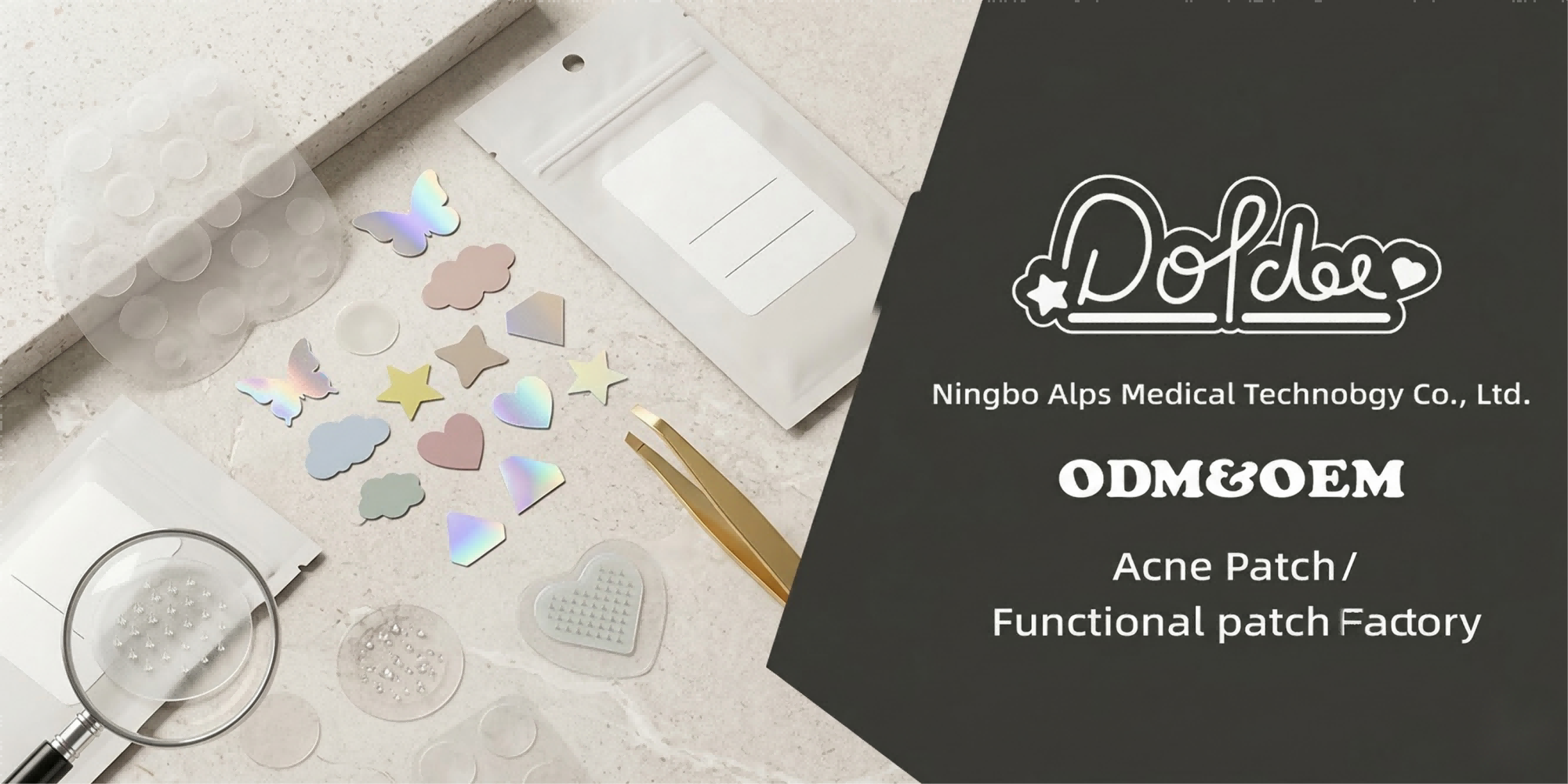
Ready to start your acne patch business? Whether you need custom formulas, private label packaging, or free samples, our team is just one message away.
*We takes your privacy very seriously. All information is only used for technical and commercial communication and will not be disclosed to third parties.
Let’s Create Your Custom Acne Patch Line
Take your skincare brand to the next level with our customized acne patch solutions. Every product we make is built on precision, performance, and partnership — helping you deliver real results that reflect your brand’s quality and care.
_画板-1-e1760947912226.png)
Ningbo Alps Medical Technology Co., Ltd. 15 Years of Acne Patch Factory Manufacturing and Wholesale
©2026All Rights Reserved.
Product
Quick Links
Get In Touch
Xingwen Future Technology City, No. 1001 Tanjiang North Road, Shounan Subdistrict, Yinzhou District, Ningbo City