Top 10 Custom Pimple Patch Ideas for Beauty Brands
_画板-1-1-300x300.png)
Alps Medical
15 Years of Acne Patch Factory Manufacturing and Wholesale
Top 10 Custom Pimple Patch Ideas for Beauty Brands
Pimple patches may be small, but they have become one of the most versatile product formats in modern acne care. What began as a simple round hydrocolloid dot has expanded into ultra-thin daytime patches, colorful beauty accessories, ingredient-infused treatments, dissolving microcrystal systems, oversized body patches and collectible refill packs.
The consumer need behind the category is substantial. The American Academy of Dermatology states that acne affects up to 50 million Americans every year. It affects approximately 85% of adolescents and can begin or continue during adulthood.
The commercial development of brands built around pimple patches also shows that the category is no longer a short-lived social media trend. In March 2026, Starface secured a $105 million strategic growth investment led by Astō Consumer Partners. Starface’s founders and existing leadership team continued to lead the business following the transaction.
For beauty brands, however, the opportunity is not simply to add a logo to a generic sheet of transparent circles. A successful custom pimple patch should solve a clearly defined consumer problem. It might need to disappear under makeup, remain attached overnight, cover a cluster of blemishes, deliver skincare ingredients or function as a visible fashion accessory.
The following ten custom pimple patch ideas are designed to help beauty brands, importers, distributors and private-label buyers build products with a stronger reason to exist.
This is not a ranking. Each idea addresses a different consumer, retail channel and price position.
1Ultra-Thin Invisible Daytime Patches
The invisible daytime patch is one of the most practical directions for skincare brands targeting adults, office workers and consumers who want to wear a patch in public. A standard transparent hydrocolloid patch is not necessarily invisible. It can still look obvious when the material is thick, glossy or surrounded by a sharply raised edge.
Successful daytime products increasingly use a combination of thinner material, tapered edges and low-reflection surfaces. Hero Cosmetics describes Mighty Patch Invisible+ as an ultra-thin daytime patch made from medical-grade hydrocolloid. COSRX’s Clear Fit Master Patch uses a matte, gradient-style construction intended to look less noticeable on the skin and become even more discreet beneath makeup. Peace Out also offers ultra-thin Day Dots designed to blend into the skin during daytime wear.
💡 How a beauty brand can customize this concept
The most important customization decision is not the packaging color. It is the physical construction of the patch. A daytime patch can be differentiated through:
- ✔ Reduced overall thickness
- ✔ Matte/semi-matte surface
- ✔ Tapered outer edges
- ✔ Thicker absorbent center
- ✔ Softly translucent material
- ✔ Split backing film
Brands should test the patch in natural daylight, office lighting, and smartphone photography. Makeup compatibility should also be tested with actual foundation and concealer products.
Best positioning: Minimalist skincare brands, pharmacy channels, adult acne products, workday skincare and “barely there” beauty collections.
2High-Absorption Overnight Patches
Daytime invisibility and overnight absorption should not always be treated as the same product requirement. An overnight patch can be slightly thicker because consumers are generally less concerned about visibility while sleeping. The additional material can provide greater fluid capacity, stronger protection against picking and better resistance to movement against pillows or bedding.
Hero Cosmetics’ standard Mighty Patch Original is sold in 36- and 72-count formats using 12 mm medical-grade hydrocolloid dots. Peace Out similarly distinguishes its overnight Acne Treatment Dots from its thinner daytime version, combining hydrocolloid with 0.5% salicylic acid, retinol and aloe vera.
💡 How a beauty brand can customize this concept
An overnight product can focus on performance rather than complete invisibility. Possible specifications include a thicker central hydrocolloid layer, stronger perimeter adhesion, a larger 12–14 mm diameter and increased absorption capacity. The backing sheet also deserves attention to prevent contamination during removal. Brands can offer several pack-count options (e.g., 36, 72, 100) without changing the core formula.
Best positioning: Pharmacy brands, mass-market acne care, Amazon multipacks, teenage skincare and value-oriented private-label lines.
3Custom Shapes That Turn Spot Care Into Self-Expression
Custom shapes are one of the most visible ways to distinguish a pimple patch brand. Starface established a recognizable identity around star-shaped hydrocolloid patches. In 2026, Rhode expanded the fashion-led direction with Spotwear, a range of 100% hydrocolloid stickers designed with Justin Bieber featuring shapes like daisies, mushrooms, jelly beans, curves and bubbles.
This demonstrates an important category shift: some consumers no longer want to hide every patch.
💡 Custom shape ideas & requirements
Original shapes might include flowers, butterflies, clouds, bows, crescents, or abstract brand symbols. The shape should still perform as a patch. A good custom shape usually needs:
- • A large enough central absorption area
- • Rounded or softened corners (narrow points may lift)
- • Clean die-cutting without rough edges
- • A backing design that allows easy removal
Best positioning: Gen Z and Gen Alpha brands, social media launches, beauty accessories, teen skincare, and impulse-purchase retail.
4Printed Pimple Patches With Brand Graphics
Shape customization changes the outline of the product. Printed customization changes the surface. A transparent or colored hydrocolloid patch can be printed with small icons, patterns, words or brand elements, creating a recognizable patch without relying entirely on a complicated die-cut shape.
Printed designs can include small monograms, brand mascots, smiley faces, checkerboard patterns, minimal line art, color gradients, or holographic-style effects. This direction is highly useful for collaborations with fashion labels, musicians, or illustrators.
💡 What brands should test
Printing must not make the patch rigid or uncomfortable. Evaluate the finished product for: color transfer, ink cracking, print fading, patch flexibility, skin-contact compliance, and alignment between printing and die-cutting. It is usually safer to begin with a restrained print.
Best positioning: Fashion-led beauty brands, influencer merchandise, event gifts, brand collaborations, and seasonal collections.
5Mixed-Size Pimple Patch Packs
Custom development does not always need an unusual shape or an advanced active ingredient. A better size assortment can create practical differentiation. COSRX Acne Pimple Master Patch contains 24 patches divided into three sizes. The consumer can select a patch that extends beyond the edges of the blemish rather than using the same diameter for every spot.
💡 How to build a better size assortment
The quantity of each size should reflect the target customer. A teenage acne pack may contain more small and medium dots. A mixed face-and-body kit may combine small facial dots with several larger cluster covers. Possible systems include:
- • 8, 10 and 12 mm formats
- • Small circles plus several oval patches
- • Daytime small dots plus larger overnight dots
Best positioning: First product launches, affordable private-label lines, pharmacies, supermarkets and travel kits.
6Ingredient-Infused Hydrocolloid Patches
Plain hydrocolloid remains an important product because it is simple and familiar. However, ingredient-infused patches allow brands to connect the format with a wider skincare philosophy. Peace Out combines hydrocolloid with 0.5% salicylic acid, retinol and aloe vera. CeraVe’s Blemish Barrier Patches combine hydrocolloid with ceramides and niacinamide.
💡 Ingredient concepts & Regulatory considerations
A brand might develop patches around Salicylic acid (blemish-focused), Niacinamide (oil-balance), Centella asiatica (soothing), or Ceramides (barrier-focused). However, adding actives requires evaluating stability, adhesion impact, and skin tolerance.
In the US, products making acne-treatment claims must comply with OTC drug requirements. Brands should decide the destination market and intended claims before finalizing formulas.
Best positioning: Premium skincare, dermatologist-inspired brands, and brands that already sell acne serums or barrier-care products.
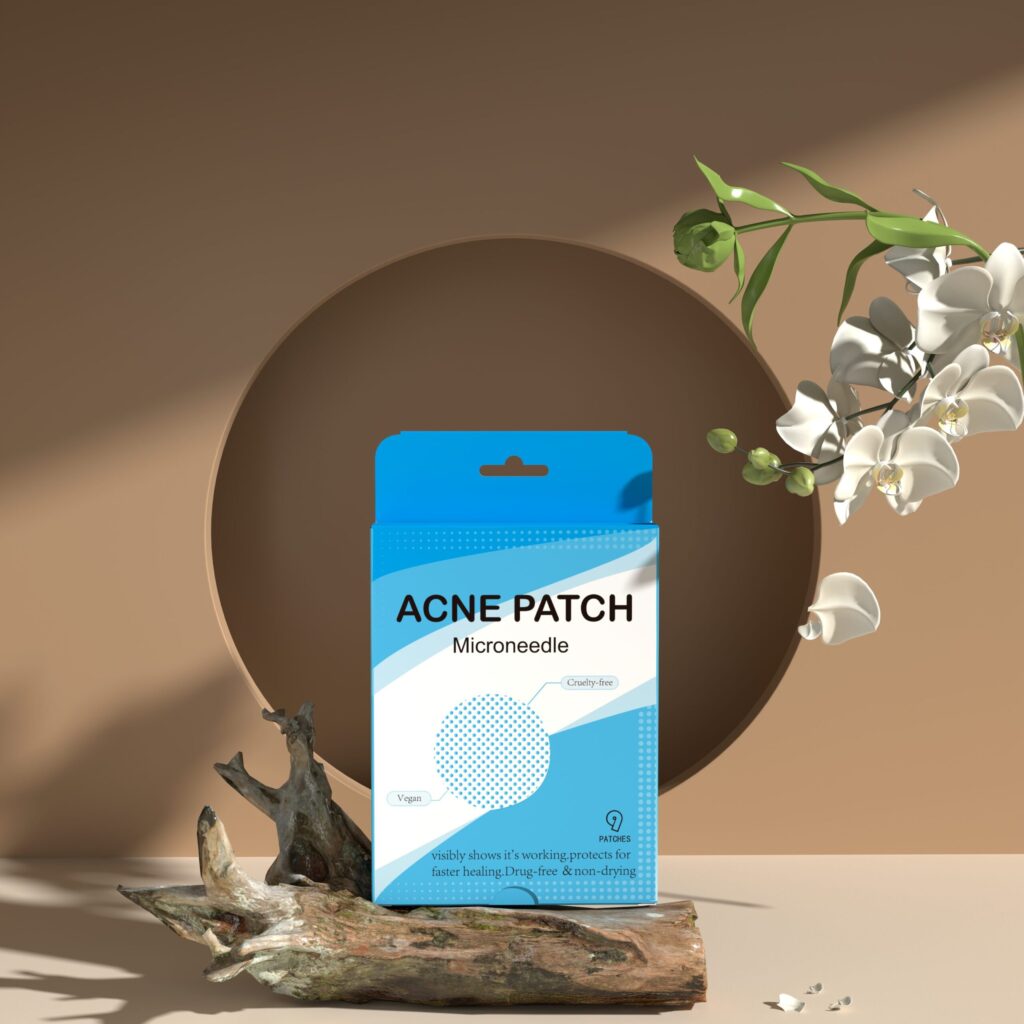
7Dissolving Microdart Patches for Early-Stage Blemishes
Traditional hydrocolloid is most relevant when moisture is available near the surface. Microdart and microcrystal patches use very small dissolving structures to hold and deliver ingredients into early-stage, under-the-surface bumps that have not yet formed a visible whitehead. This allows a brand to create a multi-stage acne routine and occupy a higher retail-price tier.
💡 Development requirements
Microdart projects require more technical planning. Brands should discuss: dart height/density, dissolution time, mechanical strength, perimeter adhesion, and moisture-resistant packaging (individual tray or cavity protection is crucial as darts can be damaged by humidity or compression).
Best positioning: Premium acne care, treatment kits, dermatology-inspired brands and ingredient-focused direct-to-consumer products.
8Large-Area Face and Body Patches
Acne can appear beyond the face. The U.S. National Institute of Arthritis and Musculoskeletal and Skin Diseases notes that acne commonly occurs on the face but can also appear on the back, chest and shoulders. Hero Cosmetics’ Mighty Patch Body measures 52 × 95 mm to cover larger zones.
💡 Custom large-area formats
A brand could develop: Back/shoulder patches, chest patches, jawline strips, nose sheets, or curved patches for body contours.
Large patches must deal with greater skin movement, sweat and friction. Flexible notches, segmented designs and rounded corners help conform to the body. Adhesion may need to be stronger, but removal shouldn’t be painful.
Best positioning: Body care, sports skincare, men’s grooming, pharmacy and post-workout skincare channels.
9Neutral-Tone and Complexion-Friendly Patches
Clear patches are widely used because one transparent material can work across many skin tones. However, clear does not always mean invisible. Light reflection and edge visibility can still make the patch noticeable. Neutral-colored patches offer another design direction. Starface’s Earth Star collection uses four neutral colorways named Shell, Clay, Pebble and Moonstone.
💡 Important development considerations
Offering only one beige shade and labeling it “skin color” can exclude a large portion of customers. A considered assortment might include several light, medium, tan and deep tones, or translucent tinted patches that soften redness without trying to create an exact foundation-style match. Test shades under different lighting, as color can shift when hydrocolloid absorbs moisture.
Best positioning: Makeup-adjacent skincare, adult acne care, minimalist beauty, and complexion-focused brands.
10Multi-Stage Kits and Refillable Packaging Systems
The final idea is not a single patch specification. It is a product system. Rael sells sets combining early-stage microcrystal covers, invisible patches for surfaced spots, and larger covers for clusters. Starface uses a reusable compact-and-refill model. These systems increase the number of reasons for a customer to return.
💡 Multi-stage kit ideas & Packaging
A brand might offer a Day and night patch duo, Teen starter kit, or Post-picking recovery set. Packaging should protect the product from humidity and heat.
Sustainability claims should be specific. Instead of vague “eco-friendly” statements, identify which component is reusable, recyclable or reduced in material.
Best positioning: Direct-to-consumer brands, subscriptions, premium gifting, and travel retail.
How to Choose the Right Custom Idea
A brand should not try to combine all ten ideas into one product. A clearer product brief begins with one primary consumer problem. Ask the following questions before requesting samples:
- ✔ Who is the target customer?
- ✔ When will the patch be worn?
- ✔ What type of blemish is it designed for?
- ✔ What is the primary point of difference?
- ✔ Where will the product be sold?
- ✔ Which countries will receive the product?
What Buyers Should Test Before Mass Production
A custom pimple patch should be tested as a finished system, not just as a piece of hydrocolloid. Overnight patches should be evaluated during sleep, while daytime patches should be tested during facial movement, makeup application and exposure to normal humidity.
Key areas to evaluate include:
Initial adhesion / Edge lifting / Absorption speed & capacity / Visible whitening / Comfort / Residue on skin / Die-cut accuracy / Patch thickness / Printed-color stability / Packaging seal strength / Heat and humidity stability.
Questions to Ask a Pimple Patch Manufacturer
Before selecting a manufacturing partner, buyers should ask for clear information about hydrocolloid material specs, available thicknesses, skin-contact safety testing, ingredient documentation, custom die-cut capabilities, MOQ, batch traceability, and regulatory support.
The manufacturer should also explain which elements are genuinely customizable and which require new tooling, stability testing or higher minimum quantities.
Final Thoughts
The custom pimple patch market offers far more possibilities than transparent round dots. Beauty brands can develop ultra-thin daytime patches, high-absorption overnight products, original shapes, ingredient-infused hydrocolloid, dissolving microdarts, and refillable product systems.
The strongest concept will not necessarily be the most complicated one. A simple patch can succeed when it has reliable adhesion, clean die-cutting, effective absorption and a clear reason for the consumer to choose it. Customization should therefore begin with the consumer rather than the factory catalog.
In a crowded category, the goal is not to create the patch with the most features. It is to create the patch whose purpose is easiest to understand—and whose performance gives customers a reason to purchase it again.
This article was prepared using publicly available information accessed in July 2026. Brand products and specifications may change. Regulatory classification and labeling requirements vary by market. This content is intended for B2B product-development reference and does not constitute medical or legal advice.
More News
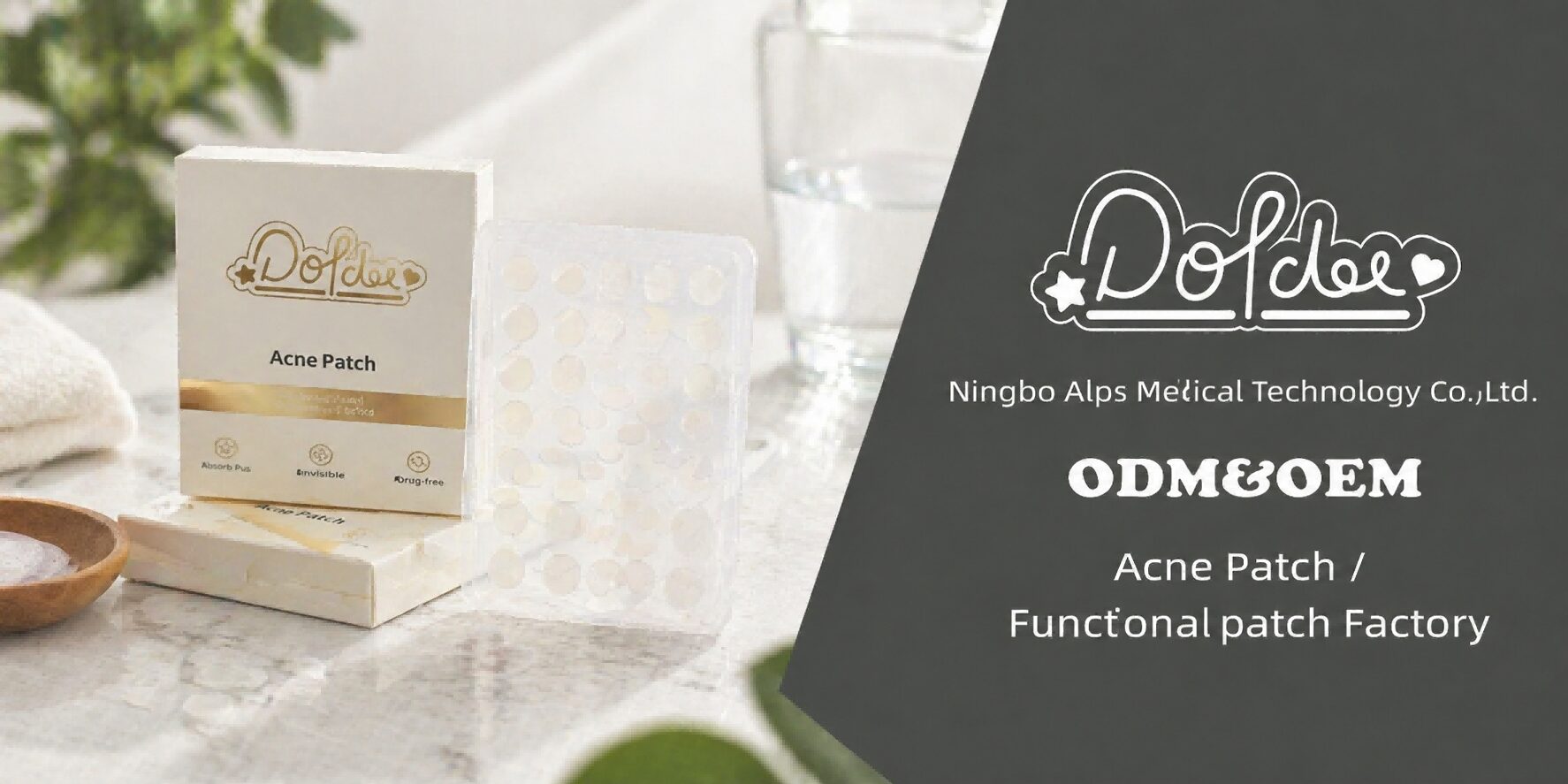
Ready to start your acne patch business? Whether you need custom formulas, private label packaging, or free samples, our team is just one message away.
*We takes your privacy very seriously. All information is only used for technical and commercial communication and will not be disclosed to third parties.
Let’s Create Your Custom Acne Patch Line
Take your skincare brand to the next level with our customized acne patch solutions. Every product we make is built on precision, performance, and partnership — helping you deliver real results that reflect your brand’s quality and care.
_画板-1-e1760947912226.png)
Ningbo Alps Medical Technology Co., Ltd. 15 Years of Acne Patch Factory Manufacturing and Wholesale
©2026All Rights Reserved.
Product
Quick Links
Get In Touch
Xingwen Future Technology City, No. 1001 Tanjiang North Road, Shounan Subdistrict, Yinzhou District, Ningbo City