Top 10 Pimple Patch Trends to Watch in 2026
_画板-1-1-300x300.png)
Alps Medical
15 Years of Acne Patch Factory Manufacturing and Wholesale
Top 10 Pimple Patch Trends to Watch in 2026
Pimple patches have developed from a niche K-beauty product into a recognizable global skincare category. Consumers can now choose from nearly invisible daytime dots, thick overnight hydrocolloid patches, colorful skincare stickers, ingredient-infused patches, dissolving microdart systems and oversized covers for body breakouts.
The commercial potential is supported by a large and persistent consumer need. The American Academy of Dermatology states that acne affects nearly 50 million people in the United States each year, while approximately 85% of people between the ages of 12 and 24 experience at least minor acne. Acne can also continue well into adulthood.
Market researchers do not completely agree on the size of the pimple patch category because some reports measure only anti-acne dermal patches, while others include hydrocolloid, microneedle and medicated patch products. Global Market Insights estimated the global anti-acne dermal patch market at approximately $534.2 million in 2025 and projected it to reach $582.8 million in 2026. Grand View Research separately estimated the U.S. anti-acne dermal patch market at $133.6 million in 2024, with an expected compound annual growth rate of 6.8% from 2025 to 2033. These figures should be treated as directional rather than directly comparable, but both indicate continued category expansion.
For skincare brands, importers, distributors and private-label buyers, the opportunity is no longer simply to source another sheet of transparent round patches. The real challenge is deciding which consumer problem the product should solve and how it will be differentiated.
Here are ten pimple patch trends that are likely to influence product development, packaging and retail strategy throughout 2026.
1Pimple Patches Are Becoming a Mainstream Skincare Category
One of the clearest trends is the continued movement of pimple patches from specialist K-beauty stores into pharmacies, supermarkets, beauty chains and major online marketplaces.
Hero Cosmetics’ Mighty Patch Original is sold in multiple pack counts through retailers such as Ulta and Walmart. Walmart describes it as the leading U.S. acne patch by unit sales based on Circana multi-outlet data for the 52 weeks ending May 4, 2025. Ulta also lists Hero’s Original, Surface and other specialized patch formats alongside mainstream acne cleansers and treatments.
Starface provides another sign of the category’s commercial maturity. In 2026, the company secured a $105 million strategic growth investment led by Astō Consumer Partners. BeautyMatter reported that the brand was available in more than 20,000 retail doors across North America and was expected by industry sources to approach $150 million in 2026 revenue. Baird, which advised on the transaction, confirmed the $105 million investment and stated that Starface’s founders would continue to lead the company.
💡 What this means for B2B buyers
Retailers are likely to become more selective as the category becomes crowded. A low price and a standard hydrocolloid formula may no longer be enough to win shelf space. New brands will need a clear reason to exist. Buyers should expect stronger competition around product testing, branding, packaging quality and documentation.
2Visible Pimple Patches Are Becoming Fashion Accessories
For years, acne products were designed to hide blemishes. Decorative pimple patches have reversed that idea by turning spot care into something consumers may intentionally display.
Starface helped establish this direction with brightly colored hydrocolloid stars. Its current range includes yellow, pink, black, rainbow, extra-small, tea-tree and salicylic-acid versions. The company sells patches in reusable mirrored compacts and encourages customers to select different colors and designs.
The trend became even more visible in April 2026 when Rhode introduced Spotwear hydrocolloid patches in collaboration with Justin Bieber. The collection included shapes such as daisies, mushrooms, jelly beans, curves and bubbles. Rhode describes the patches as spot-care products designed to be mixed and matched with a consumer’s outfit or makeup.
💡 What this means for B2B buyers
Decorative patches can create stronger brand recognition than generic transparent dots, particularly for Gen Z, Gen Alpha and impulse-purchase channels. However, shape design must not compromise function. Brands should avoid copying recognizable designs too closely to support an original brand identity.
3Ultra-Thin Daytime Patches Will Continue to Improve
Not all consumers want their pimple patches to be noticed. At the opposite end of the market from decorative patches, demand is growing for thinner, clearer and less reflective daytime products.
Hero Cosmetics describes Mighty Patch Invisible+ as its thinnest patch, with tapered edges intended to blend into the skin during the day. Peace Out states that its Day Dots are 61% thinner than its original overnight dots and are designed to be worn alone or underneath makeup. The INKEY List similarly markets an ultra-thin, virtually invisible patch intended to work across different skin tones.
💡 What this means for B2B buyers
“Invisible” should be treated as a performance specification, not just a marketing word. A competitive daytime patch may require reduced overall thickness, feathered or tapered edges, a matte surface, and strong edge adhesion. Samples should be tested in natural daylight and office lighting.
4Brands Are Building Products Around Different Stages of a Breakout
The traditional pimple patch was mainly intended for a surfaced whitehead. In 2026, leading brands increasingly organize products around the acne lifecycle.
Rael, for example, sells microcrystal patches for early-stage, under-the-skin bumps, invisible hydrocolloid patches for daytime use, stronger overnight covers and larger patches for breakout clusters. Hero Cosmetics has followed a similar portfolio strategy. Peace Out also offers a day-and-night system.
💡 What this means for B2B buyers
A multi-product system can be more scalable than one universal patch. This approach creates opportunities for bundles, routines, starter kits and repeat purchases. It also makes the brand easier to understand because each product has a defined job.
5Ingredient-Infused Hydrocolloid Patches Are Expanding
Plain hydrocolloid patches remain popular because they are simple, drug-free and widely understood. At the same time, more brands are adding familiar acne-care and soothing ingredients.
Peace Out combines hydrocolloid technology with 0.5% salicylic acid, retinol and aloe vera in its overnight acne dots. Starface sells hydrocolloid stars with salicylic acid or tea tree oil. ZitSticka’s Goo Getter patches include niacinamide, salicylic acid, vitamin C and tea tree oil.
💡 What this means for B2B buyers
Active ingredients can help justify premium pricing, but they also create additional technical and regulatory responsibilities. Product developers must determine stability, ingredient distribution, potential irritation, and regulatory requirements. The final patch should be evaluated for stability, compatibility, and skin tolerance.
6Microdart and Microcrystal Patches Are Moving Beyond a Niche Format
Traditional hydrocolloid performs best when fluid is already present near the surface. Microdart and microcrystal patches are designed for a different use occasion: early-stage bumps that have not yet formed a visible whitehead.
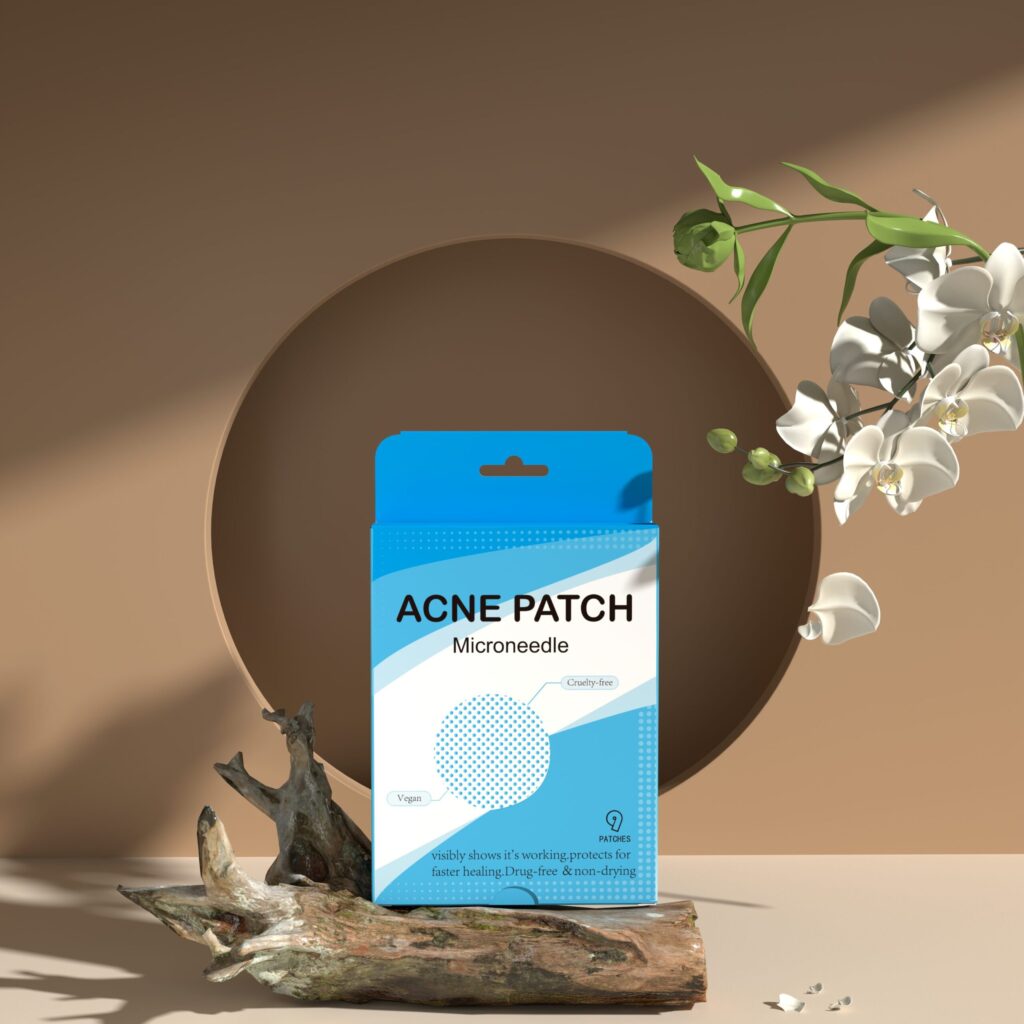
ZitSticka’s KILLA system uses self-dissolving microdarts intended to deliver ingredients into an early-stage blemish. Peace Out markets Early Stage Acne Dots containing 430 self-dissolving microneedles and 2% salicylic acid. Rael also offers Microcrystal Spot Covers for under-the-skin bumps.
💡 What this means for B2B buyers
Microdart patches may support higher retail prices and more premium positioning, but they require more sophisticated development. Important considerations include dart height and density, dissolution time, and moisture-resistant packaging. These patches are more sensitive to moisture during storage than conventional hydrocolloid dots.
7Body-Acne and Large-Area Patches Are Becoming a Serious Growth Space
Acne is not limited to the face. The National Institute of Arthritis and Musculoskeletal and Skin Diseases notes that acne commonly appears on the face but can also affect the back, chest and shoulders.
Hero Cosmetics’ Mighty Patch Body measures 52 mm by 95 mm and is designed for multiple blemishes on areas such as the chest, back and shoulders. Rael sells an oversized XL Spot Control Cover that can be used on body breakouts and clusters. Hero, Rael and COSRX also offer large patches for facial clusters or areas such as the nose, chin and cheeks.
💡 What this means for B2B buyers
Large-area patches are not simply enlarged acne dots. They must deal with greater skin movement, sweat, curved body surfaces, and hair-bearing areas. Flexible notches and segmented designs can help large patches conform to the body. For distributors, these formats may appeal to sports, men’s grooming, and body care channels.
8Sensitive-Skin and Skin-Barrier Positioning Will Become More Important
Many acne consumers are already using exfoliating acids, retinoids or benzoyl peroxide. As a result, they may be concerned not only about the blemish itself but also about dryness, irritation and barrier damage.
CeraVe’s Blemish Barrier Patches reflect this shift. The product combines hydrocolloid with three essential ceramides and niacinamide and is positioned around soothing the skin and supporting the skin barrier while reducing the appearance of blemishes. Starface also offers Recovery patches containing ingredients such as aloe vera and licorice root.
💡 What this means for B2B buyers
Sensitive-skin positioning can be valuable for adult acne consumers, pharmacy channels and brands that want to avoid aggressive acne language. Adding soothing ingredients does not automatically make a patch suitable for sensitive skin; the adhesive, backing film, and removal experience must also be considered.
9Packaging Is Becoming Part of the Repeat-Purchase Strategy
Pimple patch packaging was once dominated by simple foil pouches. In 2026, packaging is increasingly being used to create portability, collectability and customer retention.
Starface sells reusable mirrored compacts that can be replenished with 32-count refill packs. The INKEY List emphasizes that the outer carton, patch sheets and pouch for its invisible patches can be recycled, subject to local recycling capabilities.
💡 What this means for B2B buyers
Packaging should be selected according to the business model. A reusable compact may work well for youth-focused brands and collectible color launches, while a foil pouch and carton may be better for pharmacy channels and high-count value packs. The protective function of the packaging must come first to guard against moisture and heat.
10Regulatory Compliance and Product Evidence Are Becoming Competitive Advantages
As the pimple patch market grows, brands are making more specific claims about absorption time, visible reduction, active ingredients, skin-barrier support and clinical performance. This increases regulatory risk.
In the United States, FDA’s OTC Monograph M006 covers topical acne drug products. Under the monograph, permitted concentrations include salicylic acid from 0.5% to 2%, benzoyl peroxide from 2.5% to 10% and sulfur from 3% to 10%, subject to the applicable formulation, labeling and general requirements. The European Union follows a different regulatory system, and the Scientific Committee on Consumer Safety has continued to review salicylic acid exposure and restrictions in cosmetic products.
💡 What this means for B2B buyers
Regulatory planning should begin before packaging design and mass production. Buyers should confirm intended product category, destination country, permitted ingredients, and acceptable acne-related claims. A formula and claim set that is acceptable in one market should not automatically be used unchanged in another.
What Should a Pimple Patch Brand Develop in 2026?
The ten trends above do not mean that every brand should immediately launch ten different patch products. A better development strategy begins with a defined customer and use occasion.
Before requesting samples, buyers should define:
- ✔ Target customer
- ✔ Target price
- ✔ Intended blemish stage
- ✔ Facial or body use
- ✔ Patch diameter and shape
- ✔ Adhesion strength
- ✔ Packaging structure
- ✔ Regulatory market
Without these decisions, suppliers can provide samples, but they cannot accurately optimize the product.
Final Thoughts
The pimple patch category in 2026 is being shaped by two seemingly opposite demands. Some consumers want patches that are thinner, clearer and almost impossible to see. Others want colorful patches that function as visible beauty accessories. This variety is good news for private-label brands, but it also means that generic product development is becoming less effective.
The winning product does not need to follow every trend. It needs to solve one clear consumer problem, perform consistently and communicate its purpose honestly. As the category matures, material quality, adhesion, absorption, design, testing and regulatory support will matter just as much as the hydrocolloid itself.
This article was prepared using publicly available information accessed in July 2026. Market estimates vary according to research methodology and product-category definitions. Product specifications and regulatory requirements may change by country. This content is intended for B2B market research and does not constitute medical or legal advice.
More News
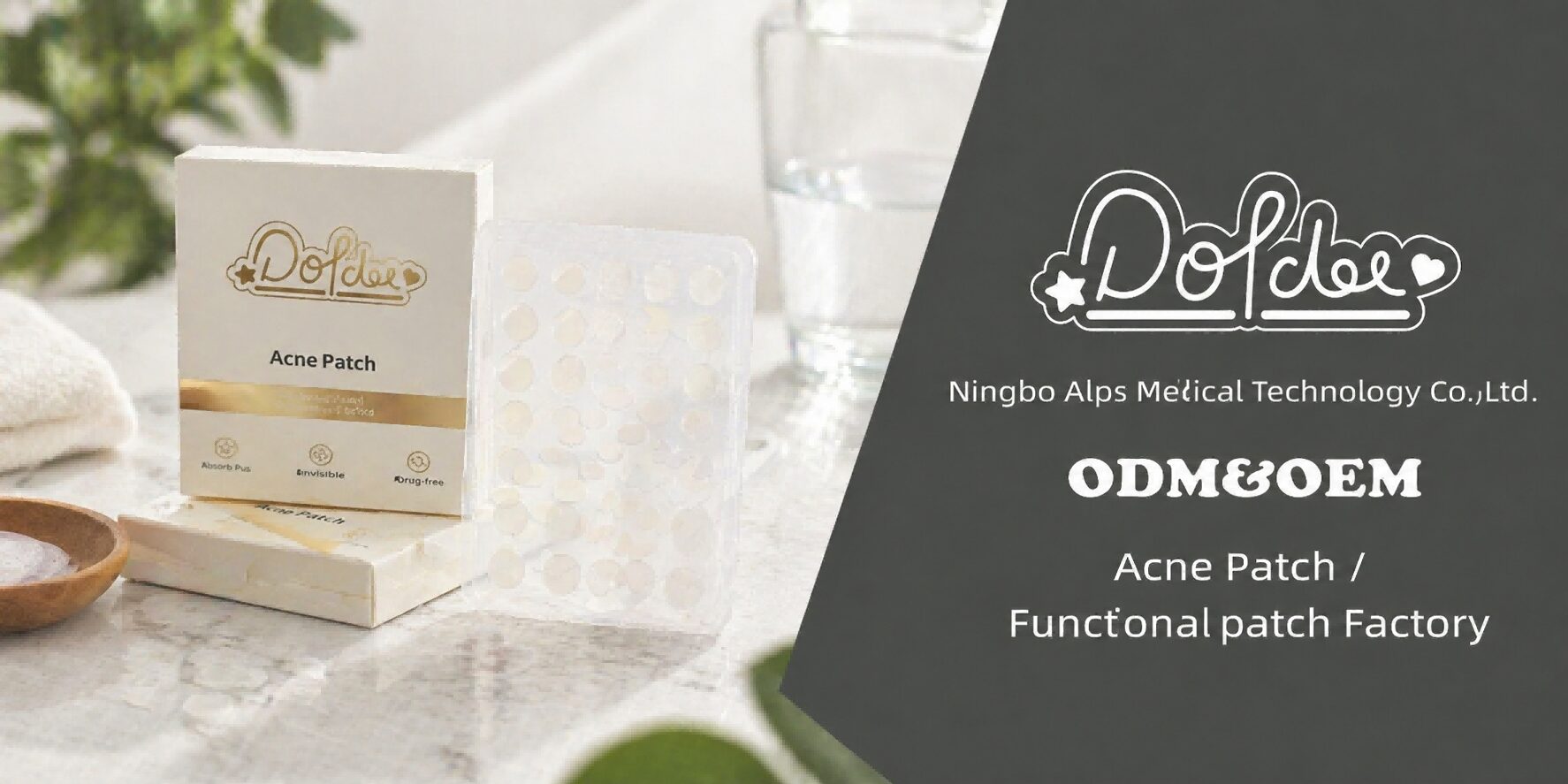
Ready to start your acne patch business? Whether you need custom formulas, private label packaging, or free samples, our team is just one message away.
*We takes your privacy very seriously. All information is only used for technical and commercial communication and will not be disclosed to third parties.
Let’s Create Your Custom Acne Patch Line
Take your skincare brand to the next level with our customized acne patch solutions. Every product we make is built on precision, performance, and partnership — helping you deliver real results that reflect your brand’s quality and care.
_画板-1-e1760947912226.png)
Ningbo Alps Medical Technology Co., Ltd. 15 Years of Acne Patch Factory Manufacturing and Wholesale
©2026All Rights Reserved.
Product
Quick Links
Get In Touch
Xingwen Future Technology City, No. 1001 Tanjiang North Road, Shounan Subdistrict, Yinzhou District, Ningbo City