6 Steps: From Acne Patch Concept to Market
_画板-1-1-300x300.png)
Alps Medical
15 Years of Acne Patch Factory Manufacturing and Wholesale
Table of Contents
Launching a successful acne patch brand is not just about having a good idea. It requires the right formulation strategy, compliant manufacturing, strong positioning, and efficient execution. Whether you are a skincare startup, distributor, or established beauty brand expanding your product line, understanding the full journey—from concept to shelf—can dramatically reduce risk and accelerate profitability.
Below are the 6 essential steps that transform an acne patch idea into a market-ready product.
Step 1: Define Your Market Position & Product Strategy
Before discussing materials or packaging, you must define your commercial positioning:
- Who is your target audience? (Teen acne, adult acne, sensitive skin, premium market?)
- What is your price positioning? (Mass, mid-range, dermatologist-grade, trendy cosmetic?)
- What makes your product different? (Ultra-thin, microneedle, active-infused, cute shapes?)
This step determines:
- Patch thickness
- Ingredient selection
- Packaging format
- Compliance pathway
High-conversion tip: Winning brands are not built on “me too” products. They are built on clear differentiation and strong storytelling.
Step 2: Formula & Technical Development
At this stage, your manufacturer translates concept into technical specifications. This includes:
- Hydrocolloid ratio optimization (absorption vs. flexibility)
- Adhesive strength calibration (strong hold vs. sensitive skin safety)
- Optional active ingredients (salicylic acid, tea tree oil, niacinamide, etc.)
- Patch thickness design (typically 0.2mm–0.6mm)
For advanced products, microneedle structures or multi-layer systems may be engineered.
Why this matters: Poor technical balance leads to complaints such as falling off, skin irritation, weak absorption, or visible edges under makeup.
Step 3: Sampling & Performance Validation
Once prototypes are ready, sampling begins. This phase includes:
- Adhesion testing (8–12 hour wear validation)
- Absorption performance testing
- Skin compatibility checks
- Packaging durability tests
Brands often conduct small-scale market testing or influencer seeding at this stage.
Conversion insight: Fast sampling turnaround (7–14 days) significantly shortens time-to-market and increases competitive advantage.
Step 4: Compliance & Certification Preparation
Different markets require different regulatory pathways:
- Cosmetic registration (EU CPNP, US cosmetic compliance, etc.)
- ISO-certified production standards
- Ingredient safety documentation (MSDS, COA)
- Claims substantiation support
For B2B buyers, working with a factory that already holds relevant certifications reduces compliance risk and avoids costly delays.
Important: Regulatory readiness is not optional—it is a brand protection strategy.
Step 5: Branding, Packaging & Cost Engineering
This is where product meets perception.
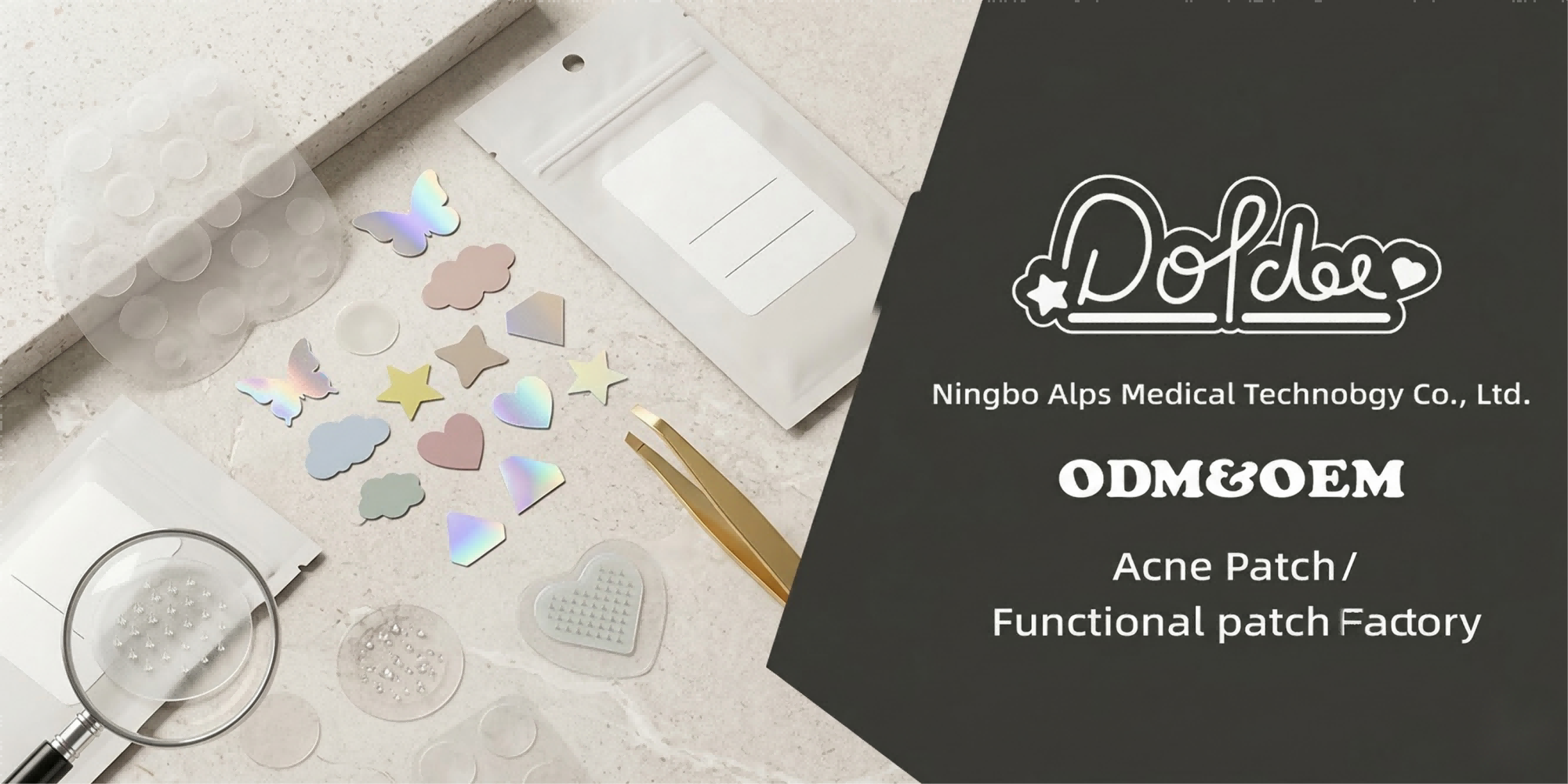
- Custom shapes (dots, stars, hearts, invisible thin patches)
- Retail box design
- Eco-friendly packaging options
- Private label artwork development
Simultaneously, cost structure must be optimized:
- Material cost control
- MOQ negotiation
- Shipping configuration (flat pack vs. carton optimization)
Margin driver: Packaging decisions can influence both perceived value and gross margin.
Step 6: Mass Production & Market Launch
Once everything is approved, mass production begins in controlled environments:
- Raw material inspection
- Hydrocolloid coating & lamination
- Precision die cutting
- Cleanroom packaging
- Final quality inspection
Lead times typically range from 15–30 days depending on customization level and order volume.
After production:
- Distribution to warehouse or 3PL
- Retail launch or e-commerce rollout
- Marketing activation (UGC, dermatologist positioning, influencer strategy)
Timeline Overview
- Concept definition: 1–2 weeks
- Sampling & testing: 2–4 weeks
- Compliance preparation: Parallel process
- Mass production: 2–4 weeks
Total estimated time to market: 6–10 weeks (with efficient supplier coordination).
Common Mistakes to Avoid
- Choosing lowest price over stable quality
- Ignoring adhesive performance
- Overpromising medical claims without documentation
- Underestimating packaging design impact
- Working with factories lacking export experience
Final Thoughts: Speed + Quality = Market Advantage
The acne patch category continues to grow globally, but competition is increasing. Brands that succeed are those that combine technical reliability, clear differentiation, and fast execution.
If you understand these 6 steps—and partner with the right manufacturer—you can move from concept to shelf with confidence, compliance, and strong margins.
From idea to retail-ready product, the process is structured. The opportunity is scalable. The key is execution.
More Products
Ready to start your acne patch business? Whether you need custom formulas, private label packaging, or free samples, our team is just one message away.
*We takes your privacy very seriously. All information is only used for technical and commercial communication and will not be disclosed to third parties.
Let’s Create Your Custom Acne Patch Line
Take your skincare brand to the next level with our customized acne patch solutions. Every product we make is built on precision, performance, and partnership — helping you deliver real results that reflect your brand’s quality and care.
_画板-1-e1760947912226.png)
Ningbo Alps Medical Technology Co., Ltd. 15 Years of Acne Patch Factory Manufacturing and Wholesale
©2026All Rights Reserved.
Product
Quick Links
Get In Touch
Xingwen Future Technology City, No. 1001 Tanjiang North Road, Shounan Subdistrict, Yinzhou District, Ningbo City